
TL;DR
This guide reviews the 10 best AI chatbots for ecommerce in 2026, including YourGPT, Ada CX, Intercom, and Gorgias. You’ll learn how modern AI chatbots handle customer support, recover abandoned carts, and automate order tracking without coding. We cover pricing, key features, integration capabilities, and selection criteria to help you choose the right platform for your store’s size and needs.
E-commerce owners face the constant challenge of answering customer questions, handling returns, offering around-the-clock support and difficulty in finding the right information faster. This high volume of tasks can strain teams, leading to slower response times and decreased customer satisfaction
When delays accumulate or issues go unresolved, customers lose confidence. This not only impacts satisfaction but also leads to missed sales and long-term brand damage.
AI chatbots can handle routine inquires, process orders, collect feedback, generate leads, and lighten the load for support teams. This helps E-commerce owners improve response times, boost customer satisfaction, and free up resources for more critical tasks.
In this blog, we have reviewed the 10 best AI chatbots for ecommerce in 2026. You will find a detailed breakdown of their features, performance, and practical value helping you identify which platform fits your business goals best.
The Best Ecommerce AI Chatbots at a Glance
| Platform | Best For | Starting Price | Key Strength |
|---|---|---|---|
| YourGPT AI | Building custom AI agents on your data | Free plan available | No-code AI builder, Unified inbox, 100+ languages, multichannel, Self Learning AI |
| Ada CX | Large-scale multilingual automation | Custom pricing | Support bot, 50+ languages, robust enterprise-grade AI |
| Intercom | Customer support automation and live chat | $39/month | Unified inbox, AI copilot, workflow automation, strong CRM integration |
| Gorgias | E-commerce support automation | $10/month | Shopify integration, macros, ticket automation, multi-store support |
| Snatchbot | Basic chatbot setup with voice | Free | Voice support, prebuilt templates, deploys on many platforms |
| Flow XO | Affordable workflows and automation | $19/month | 100+ app integrations, no-code builder, flexible automation |
| ChatBot (by text) | Visual chatbot builder | $52/month | Real-time analytics, Shopify integration, visual editor |
| Copilot Live | Personal shopping and CRM automation | Custom pricing | CRM integration, personalization, 24/7 availability |
| Landbot | Interactive, media-rich chat experiences | $40/month | Drag-and-drop builder, multimedia chat, WhatsApp/Messenger support |
| Pandorabots | Advanced chatbot scripting and logic | Free tier, paid plans from $19/month | Scripting, strong logic control, multilingual support |
What Is an E-commerce Chatbot?

An ecommerce chatbot is software that manages customer conversations directly within a store. It helps shoppers find products, get answers, track orders, and complete purchases without waiting for support teams.
Modern chatbots go beyond scripted replies. They understand what customers mean, not just what they type.
A customer asking “Can you check if my order is shipped?” receives an instant update rather than being redirected to a FAQ page.
These systems combine natural language processing and machine learning to improve with every chat. They reduce repetitive tickets, handle high-traffic queries efficiently, and keep service consistent even during peak hours.
The real difference lies in how they work.
Behind each response is a network of models, data connections, and actions that make the chatbot capable of understanding context and performing tasks on its own.
How AI Chatbots for Ecommerce Work in 2026
Ecommerce chatbots in 2026 function as intelligent agents that understand intent and act directly within your store systems.
They are powered by large language models such as GPT-5, Claude, and Gemini, which allow them to interpret messages, access real-time data, and generate context-aware responses.
AI Agents vs. Traditional Chatbots: What’s the Difference?
Traditional chatbots follow decision trees: “Do you have a question about shipping? → Click here for shipping info.”
AI agents understand intent: When a user says, “My order hasn’t arrived yet,” the system can automatically:
- Find the relevant order
- Check shipping status
- Send a proactive update to the customer
All of this happens without manual support.
The Core Technologies That Power Modern Ecommerce AI Chatbots:
1. Language and Intelligence Layer: Modern ecommerce chatbots are powered by more than just large language models. While LLMs such as GPT-5, Claude, and Gemini form the foundation for understanding intent and generating text, most platforms combine them with additional components for precision and control.
This intelligence layer typically includes:
- Natural Language Understanding (NLU) for interpreting meaning even when users type informally or make errors.
- Machine Learning pipelines that analyse chat outcomes to refine accuracy over time.
- Generative AI capabilities that creates complete, brand-aligned messages instead of relying on templates.
However, every platform structures this differently. Some use a Retrieval-Augmented Generation (RAG) framework, which connects the chatbot to store data, product catalogs, or help documents so it can provide verified answers instead of guessing. Others rely on custom architectures designed for ecommerce workflows, integrating intent detection, policy checks, and system actions within a single model.
This layered approach ensures that chatbots are not just fluent but also reliable, grounded in the actual data of each store, and capable of executing tasks such as refunds or order updates without losing conversational flow.
2. System Integration: Connects to Shopify, WooCommerce, inventory systems, CRMs, and payment gateways to take actions like processing refunds, updating orders, or applying discount codes.
3. Hybrid AI + Human Handoff: 89% of consumers prefer support that combines AI efficiency with human empathy. The best chatbots seamlessly escalate complex issues to live agents with full conversation context.
Top 10 E-commerce Chatbots to Supercharge Your Website in 2026

- YourGPT : Built for e-commerce with tailored customer support.
- Ada CX : Supports many languages and works across multiple channels
- Intercom: Real-time chat and automated support for growing stores.
- Gorgias: Centralised ecommerce support with Shopify integration.
- Snatchbot: AI with voice recognition, works on multiple platforms.
- Flow XO: Affordable and integrates with many apps for support.
- ChatBot: Simple builder with good analytics, works with Shopify.
- Copilot Live: Adds personal shopping support and CRM integration.
- Landbot: Interactive with multimedia, great for customer engagement.
- Pandorabots: Advanced customization with AI scripting options.
Top 10 Ecommerce AI Chatbots Compared [2026]
Here are the list of best E-Commerce chatbot with their features, pricing, pros and cons:
1. YourGPT AI

YourGPT is a no code AI agent platform designed for businesses that need to automate customer support, sales and workflows. It brings together chat, voice capabilities, and workflow automation in a single system, helping online stores handle customer interactions more efficiently without requiring technical expertise. It is trusted as top rated ecommerce chatbot.
Features:
- No-Code Setup and Customization: Build and launch your chatbot without writing code. The platform provides visual tools that let you design conversation flows, adjust responses, and customize the bot’s appearance to match your store’s branding in minutes rather than weeks.
- Multi-Channel Support: Deploy your chatbot across WhatsApp, Instagram, Facebook Messenger, Telegram, and your website. This ensures customers can interact with your store on their preferred platforms while you manage everything from one dashboard.
- Knowledge Base Training from Multiple Sources: Train your chatbot information from PDFs, Google Sheets, Notion pages, and your website content. The AI learns your product details, policies, and procedures to provide accurate answers based on your actual store information.
- Voice AI for Phone Support: Handle incoming customer calls and make outbound follow-ups using AI. The voice agent can answer common questions, take orders, and route complex issues to your team when needed.
- AI Studio for Custom Workflows: Create logic-based conversation paths that remember customer context. Build workflows for abandoned cart recovery, order status updates, or product recommendations that adapt based on customer behavior and purchase history.
Pros:
- All-in-One Platform Value: Get chatbot, helpdesk, workflow builder, and analytics included in your plan rather than piecing together multiple subscriptions.
- Integrations: Works seamlessly with Shopify, WooComerce, PrestaShop, and other ecommerce tools.
- Brand Consistency Across Channels: Customize the chatbot’s tone, appearance, and responses to reflect your store’s voice, ensuring customers experience your brand the same way whether they’re on your site or messaging on WhatsApp.
- Smooth Transition to Human Agents: When customers need personal attention, the bot passes the conversation to your team via Slack, email, or the dashboard with full chat history, so agents never start from scratch.
- Unified Chat and Voice Solution: Handle both text and phone interactions from one platform instead of paying for separate tools or managing disconnected systems.
- Team Collaboration Features: Built-in team chat lets your support agents coordinate on complex issues and share customer context for faster, more informed responses.
Cons:
- All the features are not available on free trial.
YourGPT AI Chatbot provides a most advanced solution for businesses looking for manychat alternative to implement AI-powered customer support and engagement tools. With its no-code and low code approach, multilingual capabilities, and omni channel integration options, it is the top choice among businesses.
Enhance Your Customer Interactions with AI
Discover how YourGPT AI chatbot can streamline your customer service
- ✓ Personalized customer interactions
- ✓ 24/7 availability for instant responses
- ✓ Seamless integration with your existing systems
2. Ada CX

Ada is a versatile e-commerce chatbot suitable for both non-technical users and developers. It’s a secure solution for data collection, with compliance for PCI, GDPR, and PIPEDA, and supports over 100 languages for global engagement.
Features:
- No-Code Setup for easy chatbot creation.
- Omnichannel functionality, compatible with WeChat, WhatsApp, and more.
- Multilingual Support for over 50+ languages.
- Advanced AI for smart responses.
Pros:
- Developer-Friendly: Offers flexibility for developers to customize and integrate the chatbot as needed.
- Multilingual: Supports a wide range of languages, facilitating engagement with a diverse, international customer base.
- Scalable for Growing Businesses: Ada CX can handle high volumes of interactions, allowing businesses to expand without compromising customer service quality.
Cons:
- Limited Platform Integrations: While Ada CX integrates with several platforms, it may not support all systems, potentially limiting its adaptability.
- Unpublished Pricing: The lack of publicly available pricing information can make it challenging for businesses to assess cost-effectiveness. Some reports suggest that costs may exceed $10,000 per month, depending on usage and features.
- Learning Curve for Non-Technical Users: Despite its no-code setup, some non-technical users may experience a learning curve during initial implementation.
- Inconsistent Response Accuracy Across Languages: Ada’s AI accuracy may vary depending on the language, resulting in less precise responses for certain global audiences.
3. Intercom
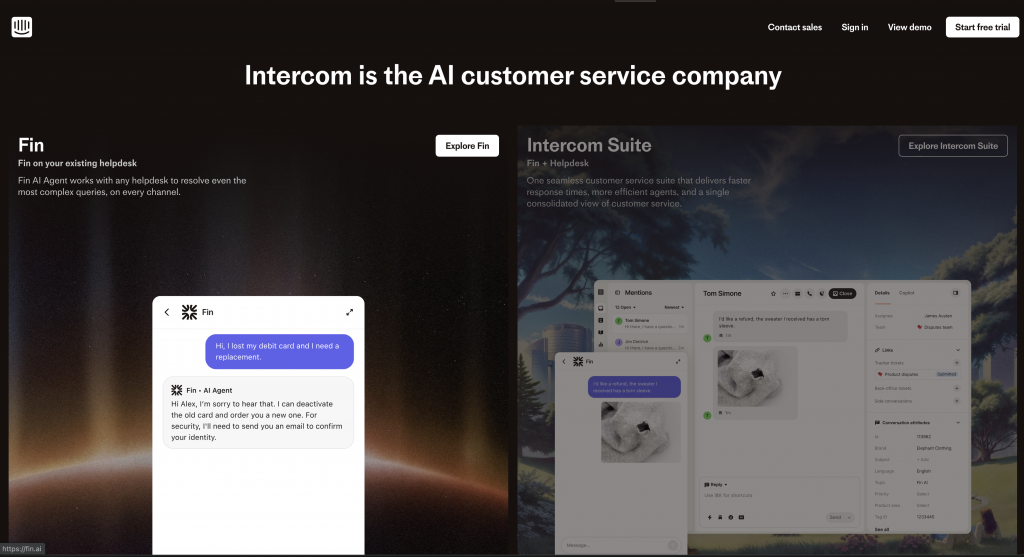
Intercom is a customer support and engagement platform that helps ecommerce brands manage conversations, automate replies, and deliver proactive assistance from one dashboard.
It combines live chat, email, and helpdesk automation to help teams handle large volumes of customer queries while maintaining a personal touch.
Features
- Unified Customer Inbox: Manage messages from multiple channels — website chat, email, and apps — in a single workspace, ensuring no customer query is missed.
- Proactive Support: Use targeted messages or chat pop-ups to engage shoppers browsing high-value pages or stuck at checkout.
- AI Copilot: Drafts responses automatically, identifies intent, and suggests relevant help articles, allowing agents to focus on complex issues.
- CRM Integration: Keeps every customer interaction linked to purchase history for context-aware support.
Pros
- Improved Efficiency: Reduces response times through automation and centralized communication.
- Proactive Engagement: Helps recover abandoned carts and convert uncertain shoppers through timely in-chat nudges.
- Integrations: Works seamlessly with Shopify, HubSpot, Salesforce, and other ecommerce tools.
- Customizable Workflows: Adaptable to fit support, sales, or marketing operations.
Cons
- Pricing: The per-seat pricing can become expensive for small or growing teams.
- Learning Curve: The range of features may require time to configure for first-time users.
4. Gorgias
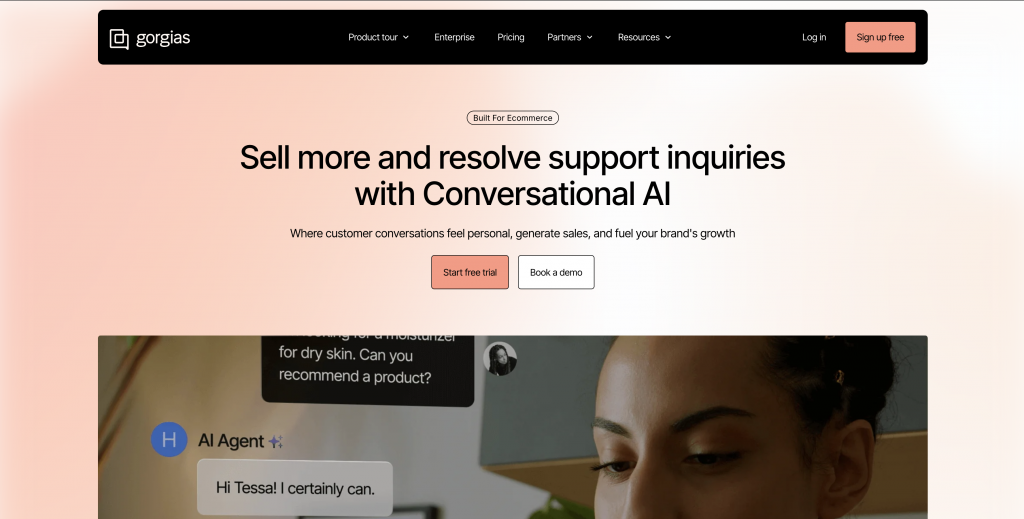
Gorgias is a support platform designed exclusively for ecommerce. It integrates with Shopify, BigCommerce, and Magento, allowing agents to manage customer conversations and store actions like issuing refunds or editing orders without leaving the dashboard.
Features
- Shopify-Native Integration: Access order details, shipping information, and customer data directly within the chat window.
- Automated Ticket Responses: Automatically resolves repetitive questions such as order tracking, shipping timelines, or return policies.
- Macros and Templates: Speeds up support by letting agents send pre-set responses for common inquiries.
- Multi-Store Dashboard: Manage multiple online stores and marketplaces from one shared inbox.
- Analytics & Reporting: Tracks response time, resolution rate, and support volume to improve performance.
Pros
- Built for Ecommerce: Purpose-built for online stores with native Shopify features.
- Time-Saving Automation: Reduces manual effort through auto-replies and smart macros.
- All-in-One View: Combines chat, email, and social messages in one interface.
Cons
- Limited Outside-Ecommerce Use: Works only for ecommerce.
- Pricing Tiers: Can be expensive for smaller stores with lower ticket volumes.
5. Snatchbot

Snatchbot is an basic chatbot with NLP, voice recognition but limited AI. It provides pre-built templates and a visual workflow for easy setup across various platforms, making it perfect for non-technical users.
Features:
- Visual Workflow for automated chat flow creation.
- Omnichannel Support: Available on Messenger, Line, Telegram, Skype, SMS, and more.
- Pre-Built Templates for quick setup.
Pros:
- User-Friendly Interface: The drag-and-drop setup simplifies chatbot creation for users with limited technical skills.
- Multi-Platform Integration: Works across various messaging platforms, extending reach to diverse audiences.
- Quick Setup: Pre-built templates help users get started quickly without the need for complex configurations.
Cons:
- Limited Customization Options: Certain customization constraints may not meet all specific business needs.
- Inaccurate Response: Misinterpretation of user inputs can sometimes lead to less accurate responses.
- Interface Complexity for Beginners: Despite its user-friendly approach, the interface may feel complex for complete beginners.
- Lacks Vertical Display for Product Lists: This limitation can affect how product information is presented visually in the chatbot.
- Limited AI Features: offers very limited AI features.
6. Flow XO

Flow XO provides multi-channel engagement and workflow automation for e-commerce businesses looking for a cost-effective chatbot solution. Ideal for customer support and marketing, it offers integrations with over 100 apps.
Features:
- Multi-Channel Support on websites, Facebook Messenger, Slack, Telegram, and SMS.
- Extensive Integrations for seamless workflows.
- E-commerce Tools to assist with order processing and customer inquiries.
Pros:
- User-Friendly Interface: Flow XO provides an intuitive, no-code platform, allowing users to create and manage chatbots without needing programming expertise.
- Versatility: The platform’s adaptability makes it suitable for various applications, from simple greetings to complex customer interactions.
Cons:
- Limited Customization: The free plan offers restricted customization options, which may not suffice for businesses with more complex requirements.
- Learning Curve: Despite its user-friendly design, mastering all features of Flow XO may require time and effort.
- Dependency on Third-Party Integrations: To achieve advanced functionalities, users often need to rely on external integrations, which can complicate the setup process.
- Limited AI Capabilities: Flow XO lacks built-in AI or machine learning features, necessitating additional integrations for intelligent chatbot functionalities
7. ChatBot

ChatBot com is a user-friendly platform that enables businesses to create custom chatbots without coding. It offers a drag-and-drop builder, real-time analytics, and integrates with platforms like Shopify, making it a suitable choice for e-commerce businesses seeking a no-code solution.
Features:
- Drag-and-Drop Builder: Customize chat flows without coding.
- In-Platform Testing to review and perfect chatbot performance.
- Multi-Platform Integration across Messenger, LiveChat, Slack, Shopify, and more.
- Real-Time Analytics and Data Collection.
Pros:
- User-Friendly Interface: The drag-and-drop builder simplifies chatbot creation, making it accessible even for those without technical expertise.
- Comprehensive Analytics: Real-time data collection and analytics help businesses monitor performance and make informed decisions.
- Wide Integration Options: Seamless integration with major platforms enhances functionality and reach.
Cons:
- Limited Integration: ChatBot offers limited integration with other platforms, including no support for WhatsApp or Telegram, and limited integration with CRM systems.
- Limited AI Capabilities: The AI features of Chatbot.com may lag behind some of other platforms, potentially restricting automation and advanced customer interactions.
- Expensive Ecosystem: ChatBot is part of a larger ecosystem of SaaS products for customer service, including LiveChat, HelpDesk, and others. However, these tools come at a high price, and to get the most out of them, you need to use several different modules—with separate subscriptions. This can lead to a significant increase in costs, making it less accessible to small businesses or those on a tight budget.
- Limited Customization: Users have noted that ChatBot.com customization options are restrictive, making it difficult to tailor the chatbot to specific business needs.
8. Copilot.Live

Copilot.Live provides a personalized shopping experience, CRM integration, and 24/7 support. With automated sales processes and FAQ handling, it’s designed to drive engagement and improve conversion rates.
Features:
- CRM Integration for unified customer data management.
- 24/7 Support and Personalized Recommendations based on customer behavior.
- Analytics Dashboard to track and optimize service performance.
Pros:
- Personalized Customer Interactions: Delivers tailored recommendations and responses based on customer behavior.
- 24/7 Availability: Provides round-the-clock support, ensuring continuous customer engagement.
Cons:
- Limited Integration Options: Offers restricted integration beyond basic CRM functions.
- Customization Constraints: Limited customization outside of pre-set workflows.
- No WhatsApp Integration: Lacks support for this popular communication channel.
9. Landbot

Landbot is a no-code chatbot platform for creating interactive customer experiences on websites and messaging channels. Its visual builder and multimedia support make it highly engaging for customer interactions.
Features:
- Visual Drag-and-Drop Builder for easy customization.
- Omnichannel Support on websites, WhatsApp, and Facebook Messenger.
- Interactive Features like images, videos, and GIFs.
- Customizable Templates for quick setup.
Pros:
- User-Friendly Interface: The intuitive visual builder simplifies chatbot creation, making it accessible for users without technical expertise.
- Seamless Integrations: Landbot offers integrations with various third-party tools such as Google Sheets, Slack, and Zapier, enhancing its functionality.
- Real-Time Analytics: Provides insights into user interactions and chatbot performance, allowing for data-driven optimizations.
Cons:
- Missing Key Features: Users often report that certain essential features they need are either missing or require workarounds, making it challenging to address specific customer requirements efficiently.
- Limited Advanced AI Features: While suitable for basic interactions, Landbot may not meet the needs of users requiring sophisticated AI capabilities.
- Complex Logic Challenges: Designing intricate conversational flows can be difficult, especially for users unfamiliar with conditional logic.
- Higher Cost for Advanced Features: Accessing premium functionalities like API integrations and detailed analytics requires upgrading to more expensive plans, which might not be feasible for smaller businesses.
10. Pandorabots

Pandorabots is a multi-language, AI-driven chatbot platform designed for startups and enterprises. With an intuitive dashboard, it provides an efficient solution for building and managing chatbots.
Features:
- Chatbot Capabilities including scheduling, contact management, and feedback collection.
- Multi-Language Support for international reach.
- Intuitive Dashboard and Knowledge Base Integration.
Pros:
- Multi-Language Support: Pandorabots supports multiple languages, making it suitable for businesses with a global audience.
- Flexible Bot Development: Offers flexibility allowing users to design bots tailored to specific business needs and conversational nuances.
Cons:
- High Learning Curve for AIML: Mastering AIML scripting is essential for advanced customization, which can be challenging for non-technical users.
- Limited Customer Support Options: Users have reported that support resources can be limited, especially for troubleshooting advanced technical issues.
- Outdated Interface Design: While functional, the interface can feel outdated compared to more modern chatbot platforms.
- Integration Complexity: Connecting Pandorabots with existing business systems can be complex, sometimes requiring additional support and expertise.
How We Selected the Best Ecommerce AI Chatbots
We reviewed 24 ecommerce chatbot platforms and shortlisted the top 10 to help you make an informed decision quickly. Each platform was assessed on measurable performance, ease of use, and long-term value for online stores.
1. Ecommerce Platform Integration (25%)
We examined how well each chatbot integrates with platforms such as Shopify, WooCommerce, BigCommerce, and Magento.
Top performers offer real-time product sync, order tracking, and inventory-aware conversations — ensuring that customers always get accurate information. Chatbots limited to simple website widgets or manual data uploads scored lower.
2. Platform Value (25%)
This section focused on what users actually experience after deploying the chatbot. We looked at genuine feedback from ecommerce teams using reviews and surveys on how the product impacts their daily operations to drive ROI.
Users consistently mentioned:
- Fewer repetitive support tickets, allowing teams to focus on real customer issues.
- Faster responses during busy sale periods without needing to hire extra staff.
- More qualified conversations, where buyers get accurate answers that lead to confident purchases.
- Higher customer satisfaction, reflected in repeat orders and better post-purchase engagement.
Platforms supported by verifiable customer stories, public testimonials, or measurable before-and-after improvements received higher scores.
Those with only marketing claims or vague “AI-powered” promises were rated lower.
3. Intelligence and Personalization (25%)
We evaluated how intelligently each chatbot understands, responds, and learns from user interactions. Key factors included:
- AI Capabilities
- Context retention across conversations
- Accuracy in product recommendations
- Multilingual coverage for global operations
- Evidence of self-learning or adaptive improvement over time
Tools that rely only on static triggers or pre-set rules were classified as basic automation, not true AI assistance.
4. Setup and Usability (15%)
We tested how fast businesses can move from signup to their first live chat.
Platforms with no-code visual builders, ready ecommerce templates, and guided onboarding scored higher. Extra weight was given to those reducing dependency and setup time.
5. Pricing and Scalability (10%)
We compared the total cost of ownership not just the headline price.
This included cost per conversation, availability of free plans, and billing transparency as usage grows.
How to Choose the Right E-commerce Chatbot
Each e-commerce business has unique customer support needs, so the right chatbot should address your specific goals and challenges. The ideal chatbot must:
1. Easy Setup: The no-code builder enables fast setup and adjustments, allowing non-technical staff to manage chat flows effortlessly.
2. Quick Customization: Easily customizable that let you match the chatbot’s tone to your brand’s voice.
3. Omni-Channel Integration: Connect with customers across multiple platforms, from your website to social media and messaging apps, ensuring a consistent experience.
4. Advanced AI Conversations: YourGPT’s AI technology delivers natural, personalized interactions, boosting customer satisfaction and engagement.
5.Improvement Over Time: Adaptive learning refines responses based on customer preferences, making interactions more relevant over time.
Benefits of AI Chatbots in E-commerce

AI chatbots make online shopping easier for customers and help businesses operate more efficiently. Here’s how:
1. 24/7 Customer Support
With AI chatbots, businesses can provide constant, round-the-clock assistance. Customers get quick answers anytime they need, building trust and increasing satisfaction with your brand.
2. Increased Sales and Fewer Abandoned Carts
Chatbots support customers during checkout by answering last-minute questions, offering discounts, and reminding them of items left in their carts. This helps increase completed purchases and reduce abandoned carts.
3. Personalized Shopping
AI chatbots use customer data to recommend products and personalize the shopping experience, making customers feel valued and more likely to buy.
4. Cost Savings
By handling repetitive questions, chatbots reduce the workload on human support teams, lowering costs and allowing staff to focus on complex inquiries.
5. Multi-Platform Integration
AI chatbots are easy to set up even without needing technical skills. They work seamlessly across websites, social media, and messaging apps, providing a consistent experience for customers on multiple platforms.
How E-commerce Business using AI Chatbot
E-commerce companies are increasingly relying on AI chatbots to improve customer interactions, simplify operations, and increase sales. Here are six ways businesses are putting AI chatbots to work:
- Automating Customer Support: Businesses are using chatbots to handle common customer questions, allowing support teams to focus on more complex issues. This makes customer service faster and more efficient.
- Driving Sales: Chatbots assist in the shopping journey by offering product recommendations and reminding customers about items left in their carts, which helps increase conversion rates.
- Gathering Customer Feedback: After purchases AI chatbots can ask customers for their feedback. This direct input gives businesses valuable information and they can use to refine their strategies and offerings.
- Generating Leads: Chatbots engage site visitors and collect contact information, building a list of qualified leads that sales teams can follow up on later.
- Personalizing the Shopping Experience: AI chatbots analyze customer behavior and preferences to deliver tailored product recommendations, which fosters loyalty and encourages repeat purchases.
- Managing Order Tracking: Businesses are using chatbots to provide real-time order updates, keeping customers informed about their deliveries and enhancing the post-purchase experience.
Frequently Asked Questions
What does an ecommerce AI chatbot do? ▼
An ecommerce AI chatbot answers customer questions, recommends products based on browsing behavior, provides order status updates, and helps shoppers find what they need. It works around the clock to support customers when your team isn’t available.
How can a chatbot increase ecommerce sales? ▼
Chatbots help complete more sales by guiding customers through their purchase, suggesting relevant products they might like, and sending reminders about abandoned carts. They also answer questions that might otherwise stop someone from buying.
Do I need technical skills to set up an AI chatbot? ▼
No technical knowledge is required. Platforms like YourGPT let you build and customize your chatbot using a visual interface. You simply upload your product information and policies, then adjust the settings to match your needs.
Can the same chatbot work on multiple platforms? ▼
Yes. You can deploy one chatbot across your website, WhatsApp, Facebook Messenger, Instagram, and other channels. Everything is managed from a single dashboard, which means consistent responses and easier monitoring.
How do I customize the chatbot to match my brand voice? ▼
You can adjust the chatbot’s tone, language style, and personality to reflect your brand. Whether your brand is casual and friendly or professional and direct, the chatbot can be configured to communicate in that same way.
Is customer data secure with an AI chatbot? ▼
Reputable chatbot platforms like YourGPT use encryption to protect customer data and comply with privacy regulations including GDPR. Customer information is handled securely throughout all interactions.
Does the chatbot provide product recommendations? ▼
Yes. The chatbot can suggest products based on what customers are viewing, their previous purchases, or what they ask about. This helps shoppers discover items they might be interested in without having to search manually.
What features does YourGPT offer for ecommerce stores? ▼
YourGPT provides a no-code builder, support for multiple languages, integration with various messaging platforms, voice capabilities, and the ability to connect with your existing systems through APIs. All these features work together in one platform.
Conclusion
AI chatbots are changing how customers shop online. By providing quick answers to questions about products, shipping, and more, they make the shopping experience smoother and more efficient. This helps customers make decisions faster and builds trust with the brand.
For businesses, YourGPT AI chatbot simplifies customer service without requiring technical skills. It can be customized to match a brand’s voice while responding to inquiries 24/7. This reduces wait times, boosts customer satisfaction, and strengthens customer loyalty.
By improving every interaction, AI chatbot helps businesses create a better overall experience, encouraging customers to return.
Scale Your Ecommerce Store with a 24/7 AI
Trusted by ecommerce businesses worldwide to handle customer queries around the clock and recover abandoned carts automatically.
No credit card required • 7 days access
Leave a Reply