TL;DR
Chaindesk works for basic chatbot use cases, but growing teams often look for alternatives with stronger AI capabilities, better integrations, and true multi-channel support.
Modern platforms focus on resolving queries, not just answering them, with automation that can handle workflows, reduce manual effort, and scale support operations more effectively.
Tools like YourGPT, Desku reflect different approaches, from AI-first automation to product-focused support, so the right choice depends on your channels, workflow complexity, and integration needs.
Chaindesk is a no-code platform used to build AI chatbots for customer engagement and basic automation. It suits teams that want to get started quickly with chatbot-driven support or self-service. However, as requirements grow around customization, integrations, workflow depth, or scale, some businesses begin evaluating other options.
In 2026, chatbot platforms cover a much broader range of use cases than simple question-and-answer flows. Many teams now expect chatbots to connect with internal systems, support multiple channels, handle complex workflows, and adapt as business needs change. When those expectations increase, reviewing alternatives becomes a practical step rather than a replacement driven by dissatisfaction.
This blog outlines six Chaindesk alternatives that businesses consider in 2026. Each platform is reviewed based on core features, pricing approach, and real-world use cases, helping you compare options and choose a solution that fits both current needs and future growth.
Why Teams Consider Alternatives to Chaindesk
Chaindesk is a widely used platform for building AI-powered chatbots, especially appealing to businesses looking for a no-code solution. However, there are situations where organizations may benefit from considering alternative platforms:
1. Advanced AI Capabilities
Chaindesk is designed for straightforward automation, which works well for simple use cases. However, businesses dealing with complex customer questions, multi-step problem solving, or context-heavy conversations may find its AI capabilities limiting. Platforms with more advanced natural language processing and intent handling can better understand varied phrasing, maintain context across turns, and respond accurately to nuanced queries. This becomes especially important as customer expectations shift toward more natural and flexible interactions.
2. Omnichannel Support
While Chaindesk covers core chatbot functionality, it may fall short for teams that support customers across multiple communication channels. Businesses operating on platforms such as WhatsApp, Telegram, or email often need consistent behavior and shared logic across all touchpoints. Many alternatives are built with omnichannel support at the core, allowing teams to manage conversations centrally and deliver a more uniform experience regardless of where the customer reaches out.
3. Integration Flexibility
As chatbots become part of daily operations, integration requirements tend to grow. Businesses often need chatbots to interact with CRM systems, order management tools, internal databases, or custom APIs. Chaindesk’s integration options can be restrictive in these scenarios, making it harder to connect chatbots with existing workflows. Platforms that offer broader integration capabilities allow chatbots to retrieve data, trigger actions, and update systems in real time, reducing manual work for teams.
4. Scalability for Growing Businesses
A chatbot that performs well at lower volumes may struggle as interaction volume and workflow complexity increase. Growing businesses often require stronger infrastructure to maintain performance, reliability, and response quality under heavier loads. In such cases, platforms designed with scalability in mind are better suited to support increasing demand, advanced routing, and more sophisticated conversation handling without degradation.
5. Flexible Customization
Chaindesk relies heavily on predefined templates, which helps teams get started quickly but can limit flexibility over time. Businesses with specific branding requirements, unique customer journeys, or specialized workflows may need deeper control over conversation design and interface behavior. Alternatives that offer more customization options make it easier to adapt chatbot experiences to changing business needs and align them closely with operational goals.
Exploring alternatives to Chaindesk allows businesses to address these limitations and select a solution that better supports long-term growth, operational complexity, and evolving customer engagement strategies.
Best Chaindesk Alternatives in 2026
1. YourGPT AI Chatbot: A no-code chatbot platform with 100+ languages support (multilingual), voice recognition, and advanced features like code execution.
2. Dante: AI chatbot platform for building knowledge-based assistants trained on your content.
3. Instadesk: Drag-and-drop chatbot builder with advanced automation and CRM integration for personalized experiences.
4. Desku: AI-powered chatbots combined with helpdesk tools for multi-channel support and ticket automation.
5. ChatFlow: Dynamic chatbot creation with guided conversation flows and analytics across multiple platforms.
6. Gleap.io: Chatbot and feedback tool for tracking user sentiment and improving customer satisfaction.
Comparison of 6 Chaindesk Alternatives in 2026
Let’s assess these alternatives based on their features, ease of use, customer support quality, integration compatibility, and unique advantages.
1.YourGPT AI Chatbot:

YourGPT is an AI-first platform for building and deploying intelligent AI agents without coding. It helps businesses manage customer support, sales, and operations from a single workspace that connects effortlessly with websites, WhatsApp, Slack, Messenger, Instagram, LINE, email, and voice channels.
Features
- No-Code Builder: Create intelligent AI agents from documents, FAQs, website links, or custom workflows. The visual builder works for both technical and non-technical teams. For advanced use cases, the AI Studio offers deeper flow logic and API-based actions.
- Custom Knowledge Bases: Train agents on your own content so they answer with accurate, context-aware responses that match your brand’s tone and policies.
- AI Copilot Builder: Enables agents to reason, plan, and perform multi-step tasks autonomously on backend and frontend based on conversations.
- Omnichannel Deployment: Deploy once and connect across WhatsApp, Messenger, Instagram, LINE, Slack, Telegram, and websites with a unified experience everywhere.
- Voice Agents: Add AI-powered phone and voice support that understands natural speech and responds instantly.
- AI Helpdesk Integration: Provide AI self-service for common questions with instant handoff to live agents when needed, keeping full conversation context.
- Analytics Dashboard: Monitor resolution rates, CSAT, AI performance, usage trends, and ROI.
- Self-Learning System: Agents improve continuously from interaction data without manual retraining.
Limitations
- Quick Product Iteration: YourGPT is developed by a fast-moving team that releases updates frequently. Some new features may evolve quickly or change based on user feedback.
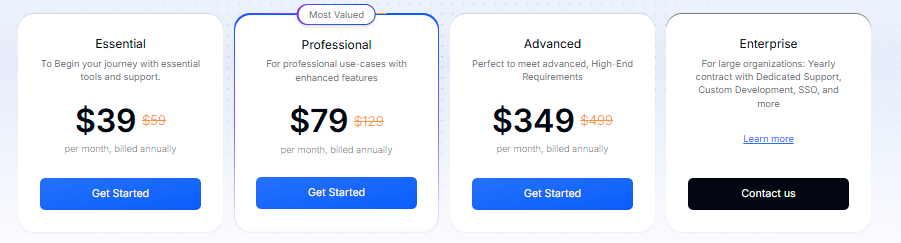
Pricing:
YourGPT AI Chatbot offers flexible pricing plans tailored to different business requirements:
- Basic plan starts at $39 per month
- Professional plan starts at $129 per month
- Advance plan starts at $499 per month
Best For
- Support Teams: Scaling customer support without increasing headcount
- Sales Teams: Automating lead qualification and follow-up processes
- Operations & IT: Managing internal workflows and task automation
- Agencies: Running multiple client chatbots with flexible control
YourGPT AI Chatbot is an excellent choice for businesses looking to enhance their customer engagement through AI-driven tools. Its no-code setup, multilingual capabilities, and broad integration options make it a versatile solution for addressing a wide range of customer support and operational needs.
2. Dante AI
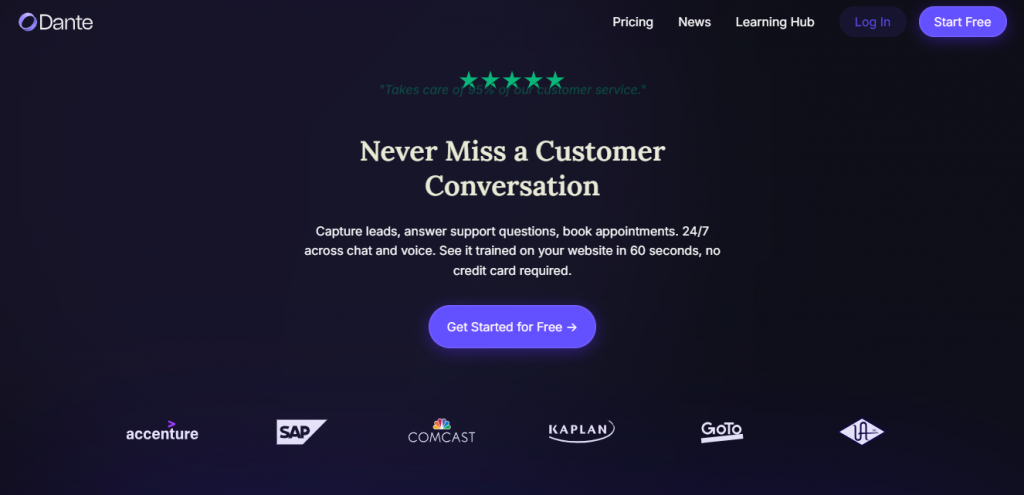
Dante is an AI chatbot platform designed to help businesses create knowledge-based assistants trained on their own content. It focuses on enabling teams to build chatbots that can answer questions accurately using documents, websites, and internal data sources, making it suitable for support and information retrieval use cases.
Features
- Knowledge-Based Training : Dante allows users to train chatbots using documents, URLs, PDFs, and other content sources. This helps the chatbot deliver responses grounded in business-specific information rather than generic answers.
- AI-Powered Responses : The platform uses large language models to understand queries and generate contextual answers based on the trained data. This improves response relevance for FAQs, documentation queries, and internal knowledge access.
- Simple Deployment Options : Dante supports embedding chatbots on websites and integrating them into applications, enabling businesses to deploy AI assistants quickly without complex setup.
- Custom Branding and UI : Users can customize the chatbot’s appearance to match their brand, ensuring a consistent experience across customer-facing interfaces.
- Basic Analytics and Usage Tracking : The platform includes analytics to monitor chatbot interactions, usage patterns, and response quality, helping teams evaluate performance over time.
Limitations
- Limited Workflow Execution : Dante is primarily designed for answering questions based on knowledge sources. It does not focus on executing multi-step actions or completing operational workflows.
- Restricted Automation Depth : While effective for information retrieval, it offers limited support for complex automation, integrations, or action-driven use cases compared to AI-first operational platforms.
Best For
- Content-Driven Support: Answering FAQs and documentation queries
- Internal Knowledge Access: Helping teams retrieve information from company data
- Small to Mid-Sized Businesses: Deploying simple AI assistants quickly
- Teams Focused on Simplicity: Prioritizing fast setup over complex automation
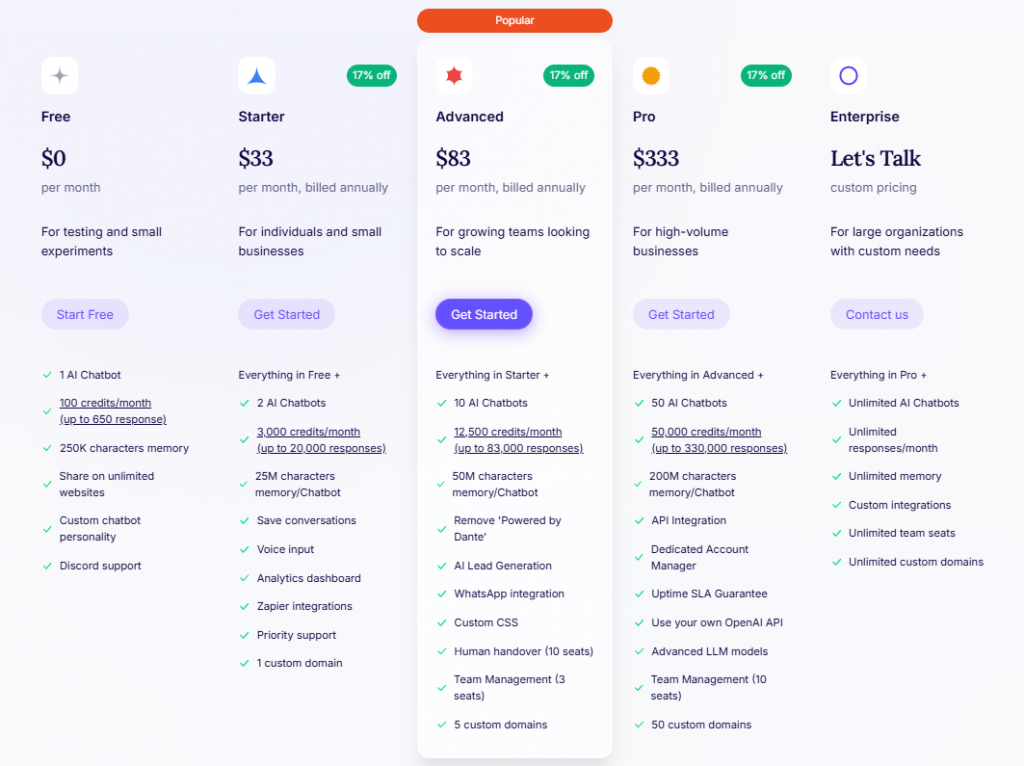
Pricing
- Free plan starts at $0 per month for basic testing and small use cases
- Starter plan starts at $33 per month for individuals and small teams
- Advanced plan starts at $83 per month for growing teams with higher usage
- Pro plan starts at $333 per month for high-volume and advanced needs
- Enterprise plan offers custom pricing for large-scale deployments
Dante is a good choice for businesses that want to build AI assistants around their knowledge base and improve information access. It works best for question-answering scenarios rather than full workflow automation or task execution.
3. Instadesk

Instadesk is a customer support and engagement platform that combines chatbots, live chat, and helpdesk capabilities into a single system. It is designed for teams that want to manage customer conversations across multiple channels while maintaining visibility into support workflows and customer data.
Features
- Unified Inbox for Customer Conversations : Instadesk centralizes conversations from website chat, email, and social messaging channels into a single inbox. This allows support teams to manage and respond to customer queries without switching between tools.
- Chatbot and Automation Builder : The platform includes chatbot functionality for handling common queries, collecting customer information, and routing conversations to the right team or agent. Automation rules help reduce repetitive manual tasks and improve response times.
- CRM and Customer Context : Instadesk provides built-in CRM features that store customer details, conversation history, and interaction timelines. This context helps agents respond more effectively and maintain continuity across conversations.
- Social Media and Messaging Integrations : Instadesk supports integration with social platforms and messaging channels, allowing businesses to engage customers where they are most active. Conversations from different channels can be handled using consistent workflows.
- Analytics and Reporting : The platform offers reporting tools to track response times, conversation volume, agent performance, and customer engagement trends. These insights help teams identify bottlenecks and optimize support operations.
Limitations
- Limited Advanced AI Depth
While Instadesk supports chatbot automation, its AI capabilities are more focused on handling routine queries rather than complex, multi-step reasoning or advanced intent handling. - Customization Constraints
Businesses with highly specialized workflows or deeply customized automation requirements may find the platform less flexible compared to more AI-first solutions.
Best For
- Customer Support Teams: Managing conversations across chat, email, and social channels
- Growing Businesses: Scaling support operations with basic automation and CRM context
- Teams Needing Unified Inbox: Centralizing customer communication in one place
- Organizations Focused on Response Efficiency: Improving handling time and visibility
Pricing
Instadesk typically offers tiered pricing based on features, number of agents, and usage. Exact pricing details may vary and usually require direct consultation with the vendor.
Instadesk is a suitable option for businesses that need a centralized customer support platform with chatbot automation, CRM context, and multi-channel communication. It works best for teams prioritizing operational visibility and support efficiency over advanced AI-driven automation.
4.Desku

Desku is a customer support platform that combines live chat, chatbots, and helpdesk tools into a unified system. It is designed to help teams manage customer conversations, automate routine support tasks, and maintain visibility across multiple communication channels.
Features
- Unified Support Inbox : Desku centralizes customer conversations from live chat, email, and messaging channels into a single inbox. This helps support teams respond efficiently while keeping conversation history and context in one place.
- Chatbot Automation : The platform includes chatbot capabilities to handle frequently asked questions, collect customer details, and route conversations to the appropriate team. These bots help reduce repetitive support work and improve first-response times.
- Ticket Management System : Desku offers built-in ticketing features that allow teams to track, assign, and resolve customer issues systematically. Tickets can be created automatically from chatbot or live chat conversations when deeper follow-up is required.
- Multi-Channel Support : Desku supports engagement across websites and selected messaging platforms, enabling businesses to assist customers through their preferred communication channels using consistent workflows.
- Reporting and Performance Insights : The platform provides analytics on ticket resolution times, agent performance, conversation volume, and customer satisfaction. These insights help teams monitor support quality and identify areas for improvement.
Limitations
- Basic AI Capabilities
Desku’s chatbot automation is effective for handling standard queries but may not support advanced AI reasoning, complex intent handling, or multi-step operational workflows. - Limited Customization for Complex Flows
Businesses with highly customized conversation logic or non-standard workflows may find Desku’s automation options less flexible compared to AI-first platforms.
Pricing
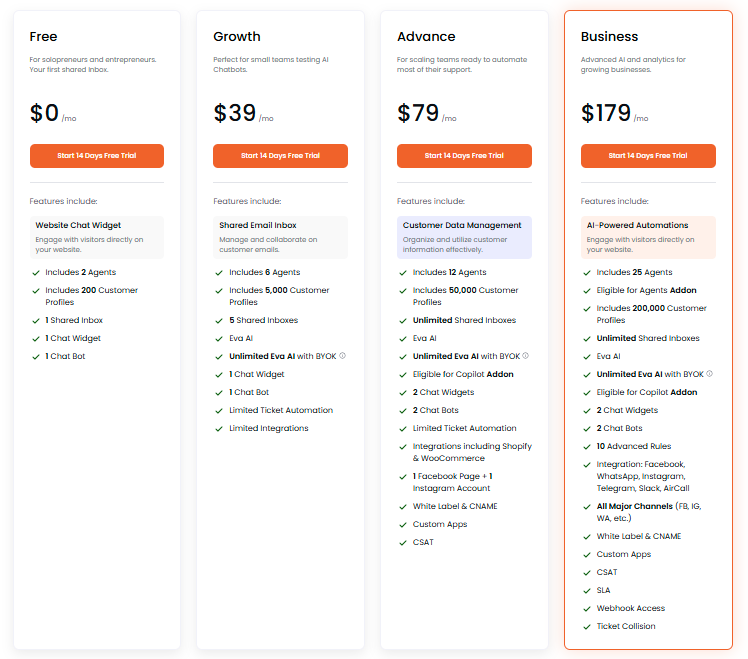
- Free plan starts at $0 per month for basic usage and small teams
- Growth plan starts at $39 per month for small teams with shared inbox and basic automation
- Advance plan starts at $79 per month for scaling teams with more agents and integrations
- Business plan starts at $179 per month for advanced automation and multi-channel support
Best For
- Support Teams: Managing tickets, chats, and emails from a single platform
- Small to Mid-Sized Businesses: Automating common support workflows
- Teams Needing Ticket-Centric Support: Tracking and resolving issues systematically
- Organizations Focused on Operational Visibility: Monitoring support performance and response quality
Desku is a practical choice for businesses looking for a combined helpdesk and chatbot solution to manage customer support efficiently. It is best suited for teams that prioritize ticket management and multi-channel visibility over advanced AI-driven automation.
5.ChatFlow

ChatFlow is a chatbot platform focused on helping businesses design and automate conversational workflows across websites and messaging channels. It is built for teams that want structured conversation flows, basic automation, and flexibility without requiring heavy technical setup.
Features
- Visual Flow Builder : ChatFlow provides a drag-and-drop builder that allows teams to design conversational flows using conditions, actions, and user inputs. This makes it easier to map out customer journeys such as lead qualification, onboarding, or support triage.
- Workflow Automation : The platform supports rule-based automation for tasks like data collection, conversation routing, and triggering predefined actions. These workflows help reduce manual handling of repetitive customer interactions.
- Pre-Built Templates : ChatFlow includes templates for common use cases such as customer support, lead capture, and FAQs. Templates help teams launch chatbots quickly while still allowing room for customization.
- Multi-Channel Deployment : ChatFlow supports deployment across websites and selected messaging platforms, enabling businesses to manage conversations from multiple touchpoints using a single chatbot logic.
- Basic Analytics and Monitoring : The platform offers reporting on conversation volume, user engagement, and flow completion rates. These insights help teams identify where users drop off and which flows need improvement.
Limitations
- Rule-Based Automation Focus
ChatFlow relies primarily on rule-based logic rather than advanced AI-driven reasoning. This can limit its effectiveness for handling complex, unstructured, or context-heavy conversations. - Limited Native Integrations
Businesses that require deep integrations with CRMs, databases, or custom APIs may find ChatFlow’s integration options restrictive without additional tooling.
Pricing
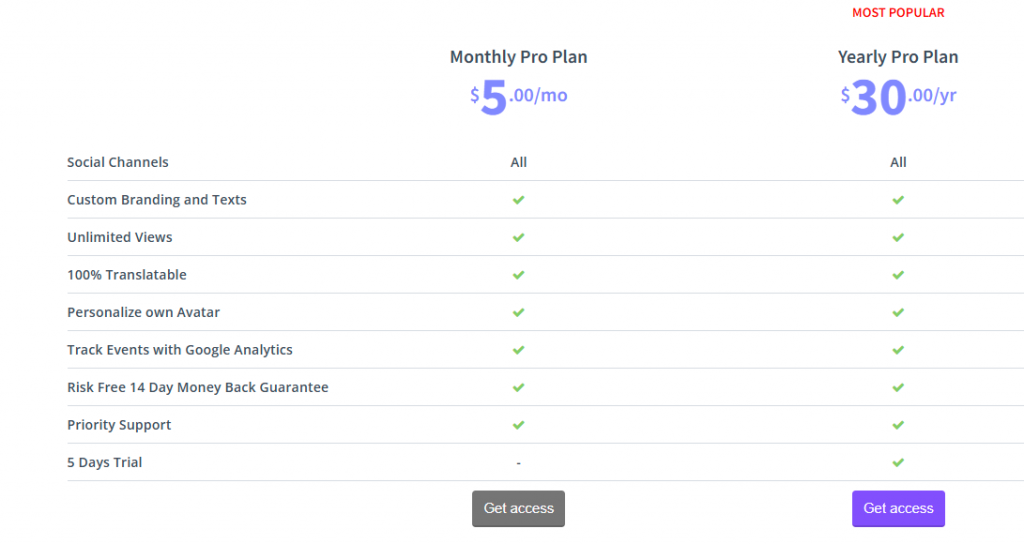
- Monthly Pro plan starts at $5 per month with full feature access
- Yearly Pro plan starts at $30 per year with added savings and trial benefits
Best For
- Teams Needing Structured Conversation Flows: Designing guided chatbot experiences
- Marketing and Sales Teams: Lead capture and qualification workflows
- Small to Mid-Sized Businesses: Automating repetitive interactions without complex AI
- Teams Preferring Visual Builders: Creating chatbots without coding
ChatFlow is a suitable option for businesses that want control over structured chatbot flows and basic automation across multiple channels. It works best for predictable use cases where clear logic and guided interactions are more important than advanced AI reasoning.
6.Gleap.io
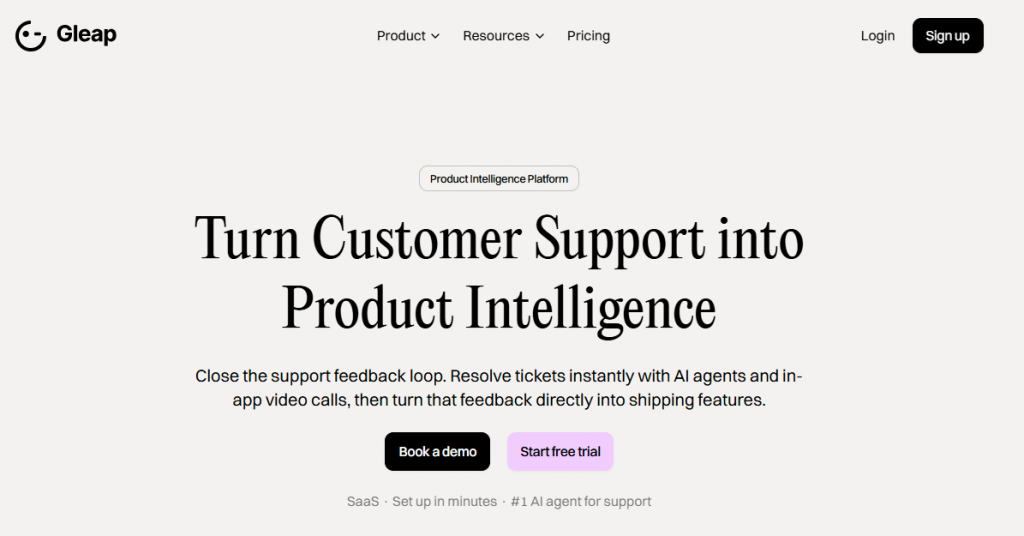
Gleap.io is a customer feedback and engagement platform designed to help teams collect, manage, and act on user feedback directly within their products. It combines in-app feedback, bug reporting, and conversational tools to give product and support teams better visibility into user issues and experience gaps.
Features
- In-App Feedback Collection : Gleap.io allows users to submit feedback directly from web or mobile applications using widgets, forms, or embedded chat. This reduces friction for users and increases the likelihood of capturing actionable insights.
- Bug Reporting with Context : The platform automatically captures technical context such as browser details, screen recordings, console logs, and user actions. This helps teams diagnose issues faster without needing multiple follow-ups.
- Conversational Feedback and Chat : Gleap.io includes chat-based interactions that let teams follow up on feedback submissions, ask clarifying questions, and keep users informed about issue resolution. This creates a feedback loop rather than one-way reporting.
- Issue Tracking and Workflow Management : Feedback and bug reports can be categorized, prioritized, and assigned to team members. Gleap.io integrates with popular issue trackers and project management tools to keep workflows organized.
- Analytics and Reporting : The platform provides insights into feedback trends, recurring issues, response times, and user sentiment. These reports help teams identify product gaps and measure the impact of improvements over time.
Limitations
- Not a Full Chatbot Automation Platform
Gleap.io focuses on feedback and issue management rather than end-to-end chatbot automation. Businesses looking to automate complex customer support workflows may need a separate chatbot or helpdesk solution. - Limited AI-Driven Conversation Logic
While Gleap.io supports conversational follow-ups, it does not offer advanced AI reasoning or multi-step automation typically found in AI-first chatbot platforms.
Best For
- Product Teams: Collecting structured user feedback and bug reports
- Engineering Teams: Receiving detailed issue context without manual back-and-forth
- Customer Experience Teams: Closing the feedback loop with users
- SaaS Companies: Improving product quality through in-app insights
Pricing
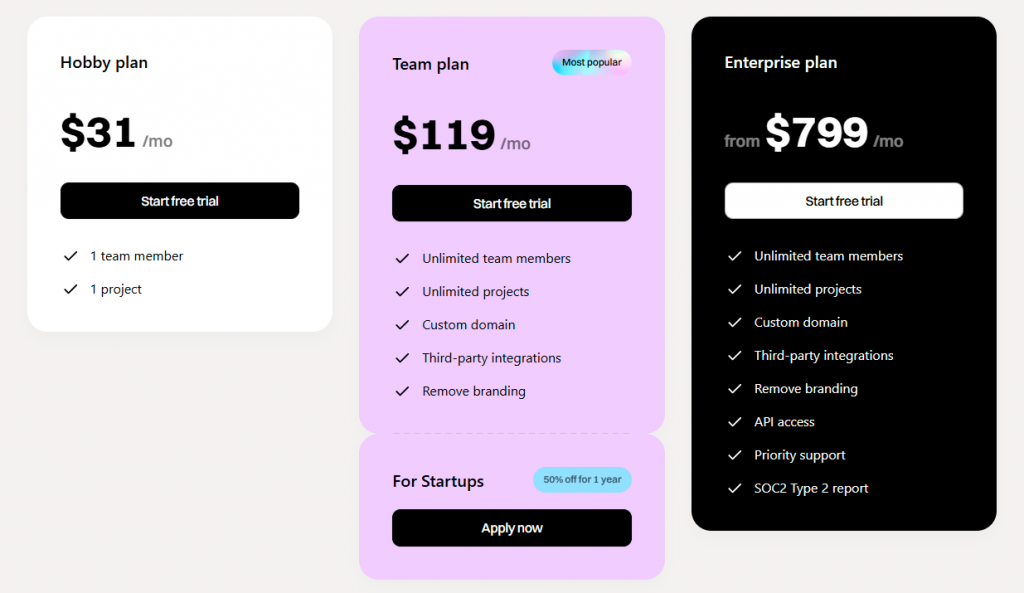
- Hobby plan starts at $31 per month for individuals with basic project access
- Team plan starts at $119 per month for teams with unlimited members, projects, and integrations
- Enterprise plan starts from $799 per month for large organizations with API access, priority support, and advanced security features
Gleap.io is a strong choice for teams that prioritize user feedback, bug tracking, and product improvement. It works best as a complement to customer support or chatbot platforms rather than a replacement for full conversational automation.
FAQ
Why consider an alternative to Chaindesk? ▼
Chaindesk works well for basic chatbot needs, but businesses seeking advanced features like scalability, deeper customization, or better integration may need other options.
What sets YourGPT AI Chatbot apart as an alternative? ▼
YourGPT AI Chatbot offers features like multilingual support, voice recognition, and code execution, making it a versatile choice for businesses with diverse requirements.
How can I choose the right Chaindesk alternative? ▼
Identify your specific needs, such as better integrations or advanced AI capabilities, and compare platforms based on their features, usability, and support offerings.
Are there options suited for small businesses? ▼
Yes, platforms like Dante and Desku provide intuitive tools and affordable plans, making them ideal for small businesses focusing on customer engagement.
Can these platforms integrate with existing systems? ▼
Many alternatives, such as Instadesk and ChatFlow, offer seamless integration with CRMs, email platforms, and other tools to streamline workflows.
Which platform is best for gathering customer feedback? ▼
Gleap.io stands out for combining real-time chat with customer feedback collection, making it a good choice for improving user satisfaction.
Are these alternatives scalable for growing businesses? ▼
Platforms like YourGPT AI Chatbot and Instadesk are built to support increasing customer interactions and operational demands, making them suitable for scaling businesses.
Choose the Right Chaindesk Alternative for Your Business
The right Chaindesk alternative depends on what role the chatbot plays in your business today and what you expect it to handle next. Instead of comparing features in isolation, it helps to start with how conversations flow, where automation is required, and which systems the chatbot must connect to.
For teams that rely on chatbots to handle structured workflows, multilingual conversations, or operational tasks beyond basic support, platforms such as YourGPT are often considered because they support deeper customization, multiple channels, and action-based automation. These capabilities matter when chatbots are expected to assist across support, sales, or internal operations rather than act as a simple FAQ layer.
If your primary goal is understanding user feedback and improving product experience, tools like Gleap.io can be more suitable. In these cases, the chatbot acts as a feedback collection point rather than a workflow engine, which shifts the evaluation criteria toward reporting, issue tracking, and insight generation.
For growing teams that need reliability at higher volumes and smoother connections with existing systems, platforms such as Instadesk and ChatFlow are often assessed for their scalability and integration support. As usage increases, performance consistency and system connectivity become more important than rapid setup.
Ultimately, choosing a Chaindesk alternative is about fit, not breadth. The best platform is the one that supports your current workflows without friction and can adapt as those workflows evolve, rather than forcing workarounds as requirements grow.
Conclusion
Choosing the right Chaindesk alternative comes down to how well the platform fits your real operating needs, not how many features it lists. Ease of use determines whether your team can actually maintain and improve the chatbot over time. Scalability ensures the platform continues to perform as volumes and workflows grow. Advanced AI and omnichannel support matter only if they align with how customers already interact with your business.
Integration is often the deciding factor. A chatbot that cannot connect cleanly with your existing ai tools quickly becomes an isolated system that creates more manual work instead of reducing it. Platforms that integrate smoothly into your current stack allow chatbots to support end-to-end workflows rather than just answer surface-level questions.
By evaluating alternatives through these lenses, ease of use, scalability, feature depth, and integration fit, you can move beyond trial-and-error adoption. The right platform should support your current use cases while remaining flexible enough to adapt as customer expectations and business requirements change.
Enhance Your Customer Experience with AI-Powered Chatbots
Join thousands of businesses transforming customer interactions with YourGPT AI
- ⚡️ 5-minute setup
- 🌐 Multi-lingual
- 🗣️ Voice Support
- 🔌 Omni-Channel Integration
No credit card required • 7 days access • Limited time offer
Leave a Reply