Choosing the right customer communication tool affects how quickly you respond, how effectively you resolve issues, and how your customers experience your brand. While Tidio works for many teams, its limitations in AI capabilities, customization, and scalability often become clear as businesses grow.
In 2026, newer platforms go beyond basic chat. They automate workflows, connect with your systems, and help teams move from handling conversations to completing tasks.
To help you choose, we reviewed and compared 12 strong Tidio alternatives based on features, flexibility, and real use cases. These tools help improve support quality, reduce manual effort, and scale customer interactions without adding complexity.
Why Consider Tidio Alternatives?
While Tidio is a popular live chat and chatbot platform, several limitations may prompt businesses to consider alternative platforms:
1. Limited AI Capabilities : Tidio’s AI chatbot (Lyro) can only answer questions based on content you manually feed it, such as FAQ pages or Q&A pairs. It cannot learn from past support tickets, handle complex multi-step requests, or improve on its own over time. For businesses expecting AI that truly evolves, this is a significant gap.
2. Limited Customization : Beyond basic color and text changes, Tidio offers limited options for customizing chatbot appearance and behavior. Teams with specific design or workflow requirements often find themselves working around the platform rather than with it.
3. No Voice or Phone Campaign Support : Tidio is built exclusively for text-based chat with no voice AI, no phone support, and no outbound calling capabilities. Businesses that need phone-based campaigns or voice follow-ups will require a completely separate tool.
4. Pricing Escalates Quickly with Add-ons : Lyro AI and Flows are billed separately on top of the base plan, making the real cost much higher than it first appears. What looks like an affordable starter plan can easily reach $100 to $150 per month once AI and automation add-ons are included.
5. Agent and Scalability Limits : All standard Tidio plans cap at 10 human agents, making it a difficult fit for growing teams. Lyro also does not integrate with Tidio’s Flow Builder, which creates gaps in conversation handling when customers go off-script.
6. Slow Product Development : Users report that Tidio’s updates are infrequent and often delayed. Feature requests can take months to be addressed, and certain AI limitations around translation and advanced workflows remain unresolved.
What Makes a Great Customer Support Tool?
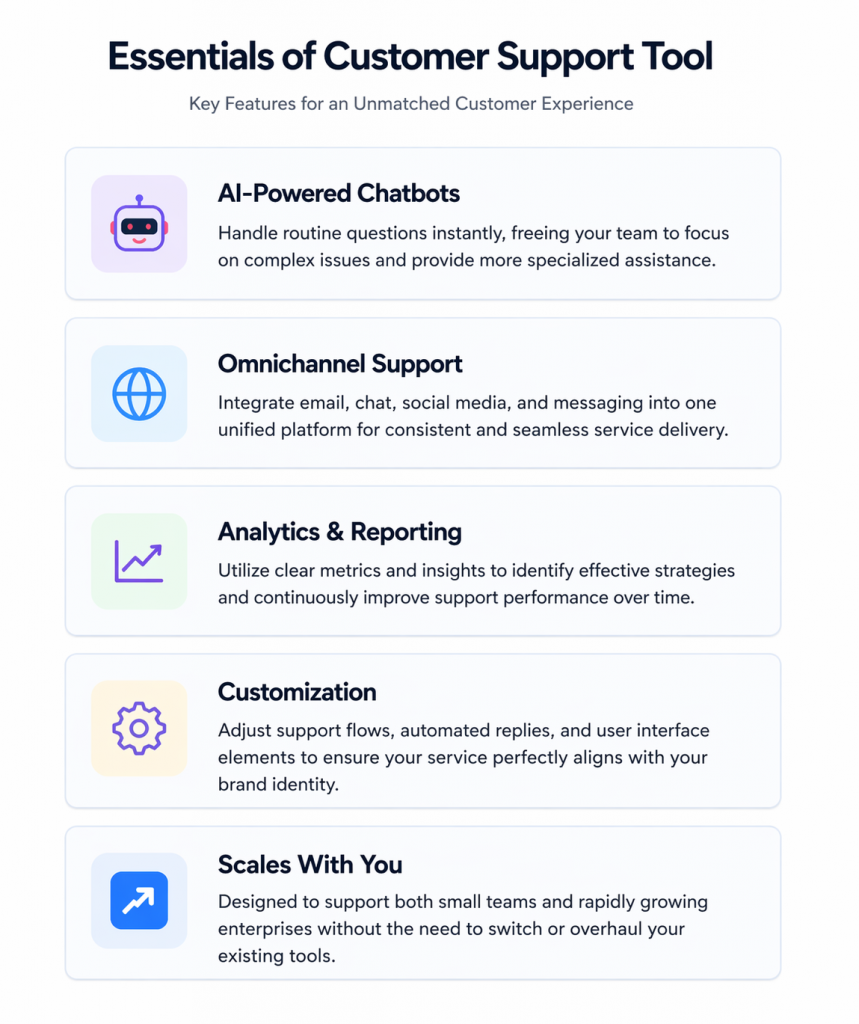
Customer service is always changing, but some things never change. When choosing the best tool, keep these important things in mind:
- AI-powered Chatbots: Great chatbots handle routine queries instantly, saving your team’s time and effort. They free up human agents to tackle complex problems, creating a smoother support experience and happier customers.
- Omnichannel Support: Customers use a lot of different ways to get in touch, such as email, social media, and messaging apps. A great support platform combines all of these channels together, making sure that your clients get the same level of care no matter how they contact you.
- Analytics and Reporting: Good data helps you improve your service continuously. Analytics give clear insights into what’s working and what isn’t, enabling you to adjust strategies based on real customer interactions.
- Customization Settings: Each business has its own way of expressing itself and doing things. Your support tool should let you change how you connect with customers, how you respond, and even the interface to make sure it clearly shows your brand’s personality.
- The ability to scale: Your customer support needs will grow as your firm does. A excellent tool grows with you, helping your team as you grow, whether you’re a little firm or a large one.
Now, let’s take a closer look at these alternatives to Tidio and see how each one aligns with your specific business needs.
The Best Alternatives to Tidio at Glance
| Platform name | Best for |
|---|---|
| YourGPT AI | Businesses needing an AI-first platform for automation across support, sales, and operations |
| Intercom | Teams looking for an all-in-one tool for customer support, sales, and AI workflows |
| Gorgias | eCommerce brands managing support, orders, and customer data in one helpdesk |
| Yellow AI | Enterprise brands needing large-scale conversational AI solutions |
| HelpCrunch | Companies wanting omnichannel messaging with AI-enabled support |
| Sendbird | Apps requiring scalable chat and messaging infrastructure |
| ManyChat | Marketing automation on Instagram, Messenger, and WhatsApp |
| TARS | Simple conversational bots built through an easy drag-and-drop builder |
| Botsurfer | Small teams needing fast, no-code chatbot deployment |
| Botpress | Developers who need a flexible, customizable chatbot framework |
| Botsify | Multi-channel chatbot automation with ready-made industry templates |
| Chatfuel | Quick bot creation for Facebook Messenger and social channels |
Best Tidio Alternatives for 2026: Features, Pros, and Comparisons
Now that you have a list of the top 12 Tidio alternatives for 2026, let’s dive into the details. First up is YourGPT AI, one of the top AI-powered alternatives to Tidio. We’ll explore its key benefits, standout features, and how it compares to Tidio.
1. YourGPT AI: Best Alternative to Tidio

YourGPT is an AI-first platform built to automate customer support, sales, and business operations from one system. It brings together AI chat, no-code agent building, an omnichannel inbox, and real-time analytics, so teams can manage conversations and workflows without relying on multiple tools.
The platform lets businesses train AI on their own data and deploy it across web, WhatsApp, email, and messaging channels. With its AI Studio, teams can build agents that not only respond but also take actions such as resolving queries, updating records, or triggering workflows. For companies looking to move from handling conversations to completing tasks, it provides a structured, scalable setup.
Pros:
- No-code builder to set up, train, and customize AI agents
- Trains on PDFs, Notion, websites, Google Sheets, and help docs
- Supports live agent handoff via Slack, email, and internal chat
- Omnichannel inbox across Web, WhatsApp, Messenger, Telegram, and LINE
- Voice AI agent for real-time phone conversations with customers
Con:
- Limited functionality on a Trail plan
- Custom API integrations may require developer support (but the overall platform is no-code)
Pricing:
- YourGPT offers a 7-day free trial. Paid plans start at $49/month with access to all core features.
YourGPT is a great alternative to Tidio for teams that want to automate support, collect leads, and manage discussions across all channels on one platform, without having to put together different solutions.
Tired of Tidio’s Limitations?
If you’re frustrated with lack of AI, delayed customer responses, conversation limits and complicated pricing structures, you’re not alone.
Losing potential customers due to chat limitations
Paying for features you don’t need or use
Dealing with confusing chatbot setup processes
See how YourGPT AI solves these problems
2. Intercom
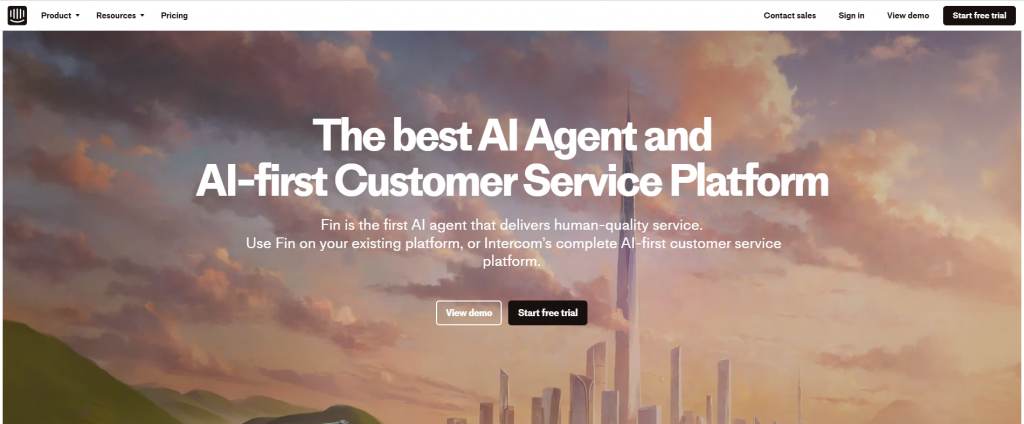
Intercom is a customer support and engagement platform built to manage conversations, automation, and support workflows in one place. It combines live chat, AI chatbots, helpdesk ticketing, and sales communication, making it suitable for teams handling customer interactions across multiple channels. Growing businesses use it to centralize conversations from web, email, and messaging platforms into a single inbox.
Intercom also includes tools for automation, customer segmentation, and AI-driven responses through its Fin AI Agent. Teams can set up workflows, route conversations, and track performance with built-in analytics. For companies managing high conversation volumes, it provides a structured way to handle support, sales, and onboarding within one system.
Pros:
- User-friendly interface with an intuitive inbox and workflow builder
- Powerful Fin AI Agent for automated customer resolutions
- Multichannel support including web chat, email, SMS, and WhatsApp (usage-based)
- Strong integrations with tools like Salesforce, HubSpot, Shopify, Slack, and more
- Detailed analytics for conversation performance and agent efficiency
Cons:
- Pricing can be expensive for small teams
- Steeper learning curve due to extensive features
- Some advanced tools require add-ons or higher-tier plans
Pricing:
- Intercom offers a 14-day free trial.
- Paid plans start at $39/month for basic inbox and messaging.
Intercom is an excellent choice for businesses wanting a scalable support platform with strong AI capabilities. It’s especially valuable for teams handling high conversation volumes or needing a unified inbox. However, companies with limited budgets or simple use cases may find it pricier compared to lightweight chatbot tools.
3. Gorgias
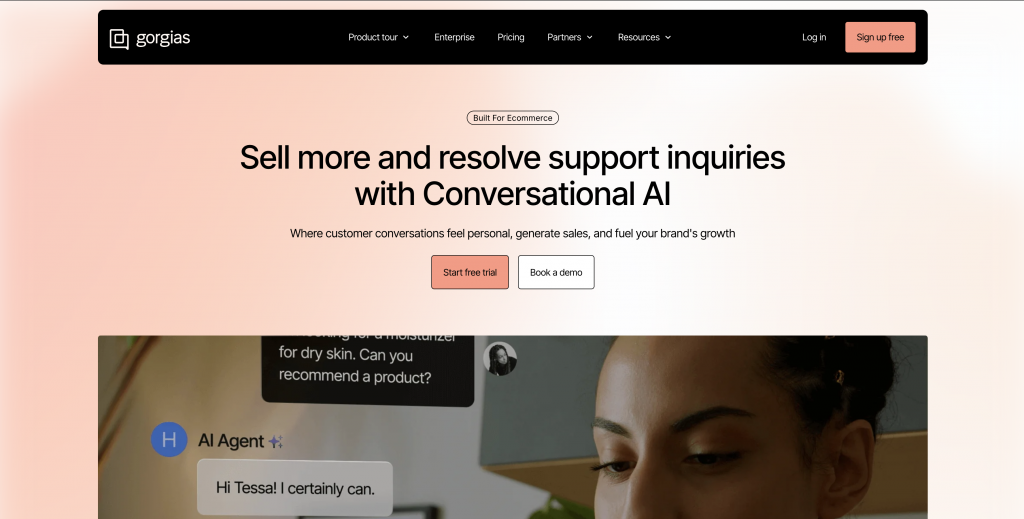
Gorgias is built for eCommerce support teams that need to act on customer requests, not just respond. It brings conversations and store data into one place by connecting with platforms like Shopify and WooCommerce. Agents can see order details, customer history, and payment information directly inside the helpdesk.
This reduces tool switching and speeds up resolutions. Teams can process refunds, edit orders, and handle common queries from a single interface, making it easier to manage high volumes of order-related conversations.
Pros:
- Deep integration with Shopify, WooCommerce, Magento, and other eCommerce platforms
- Agents can view and modify orders, refunds, and subscriptions directly from the helpdesk
- Strong automation for repetitive support tasks and macros
- Omnichannel support including email, chat, Instagram, Facebook, and SMS
- Revenue tracking with insights tied to support interactions
Cons:
- Built mainly for eCommerce, not suited for non-retail businesses
- Pricing increases with ticket volume
- Less flexible compared to AI-first or highly customizable platforms
Pricing:
Gorgias offers a free trial. Paid plans start around $50/month, based on ticket volume.
Gorgias is a good fit for eCommerce teams that want faster resolutions and direct control over order-related support. For broader AI automation across departments, it may feel limited.
4. SendPulse
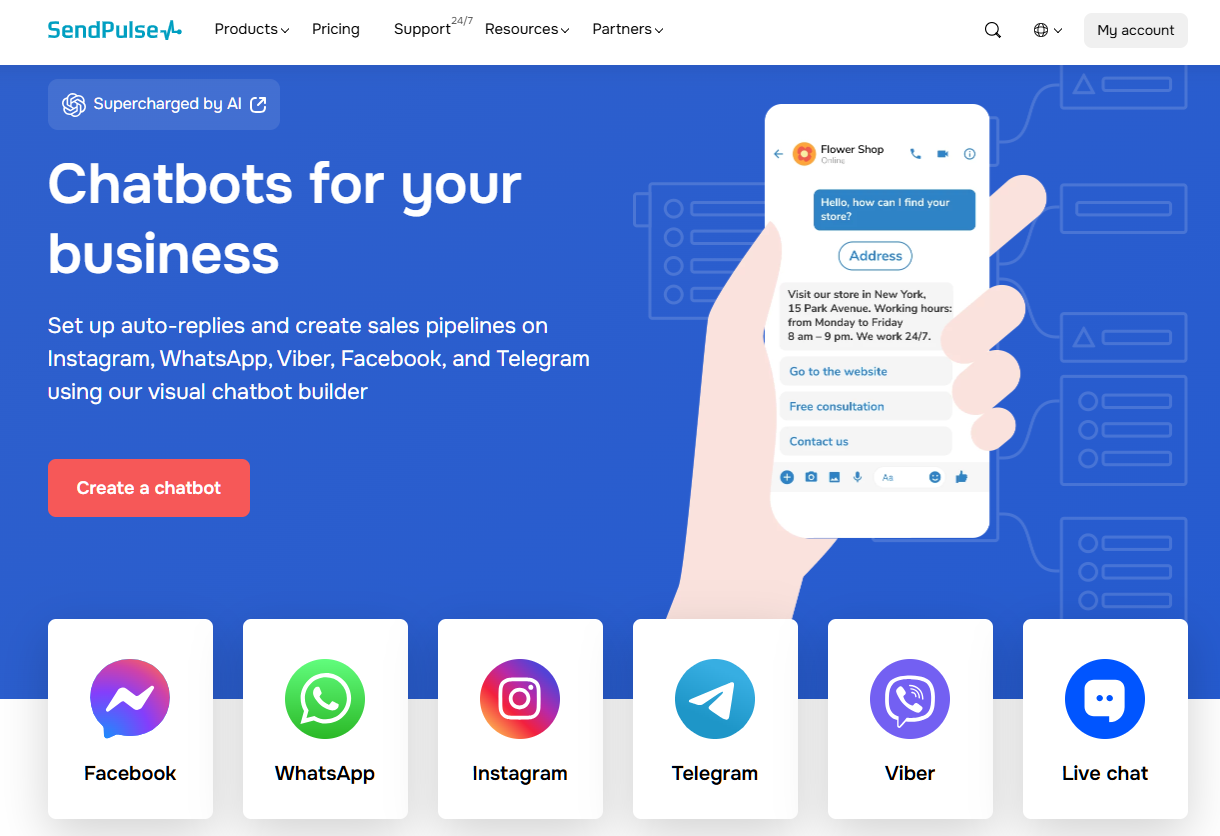
SendPulse is a marketing automation platform built for businesses that want to manage communication across multiple channels from one place. It combines chatbots, email marketing, SMS, and CRM features into a single system, making it easier to handle customer interactions without switching tools. This makes it a strong alternative to platforms focused only on live chat.
SendPulse supports chatbot automation on channels like WhatsApp, Telegram, Instagram, and Facebook Messenger, along with built-in tools for email campaigns and customer segmentation. Its visual builder helps teams create automated flows for lead capture, follow-ups, and support. For businesses looking to run marketing and communication workflows together, it offers a practical, all-in-one setup.
Pros:
- No-code chatbot builder for WhatsApp, Instagram, Telegram, Facebook, and Viber
- Built-in CRM for better customer data management
- Official provider for WhatsApp Business API
- Integration with OpenAI for ChatGPT-powered chatbots
- Pre-made chatbot response templates
- User-friendly smartphone app for managing chatbots on-the-go
Cons:
- Limited chatbot functionality available in the free plan
- Dashboard interface can feel overwhelming due to extensive features
- No free tier for WhatsApp chatbot services
Pricing:
- SendPulse provides a free plan that supports up to 3 chatbots. Paid plans start at $8 a month for 500 subscribers only. The price may go higher if the number of chatbot subscribers grows.
SendPulse is a good platform for teams aiming to unify chatbot automation, marketing campaigns, SMS notifications, and CRM within a single platform to manage multiple marketing channels efficiently.
5. TARS

TARS is a chatbot platform designed to replace traditional forms with conversational experiences. It helps businesses capture leads, qualify prospects, and guide users through specific actions using structured chat flows instead of static pages. The platform focuses on simplicity, allowing teams to build and launch chatbots without heavy technical setup.
TARS uses a drag-and-drop builder to create guided conversations for use cases like landing pages, support queries, and campaign funnels. It supports integrations with CRM and marketing tools, making it easier to pass collected data into existing workflows. For teams focused on lead generation and conversion-focused interactions, it provides a fast way to deploy and test conversational funnels.
Pros:
- User-friendly drag-and-drop interface
- Wide range of templates for quick setup
- Supports multiple languages
- Integration with popular platforms like WordPress and Shopify
- Advanced analytics and reporting features
Cons:
- Pricing can be steep for small businesses
- Limited customization options for complex workflows
- Some users report occasional glitches in the bot builder
Pricing:
- TARS offers a 14-day free trial. Paid plans start at $99/month for the Professional plan, with Custom plans available for larger businesses.
TARS shines in its ease of use and quick deployment capabilities. It’s particularly well-suited for businesses looking to implement chatbots for lead generation and basic customer support. However, companies requiring more complex interactions or extensive customisation might find it somewhat limiting.
6. HelpCrunch
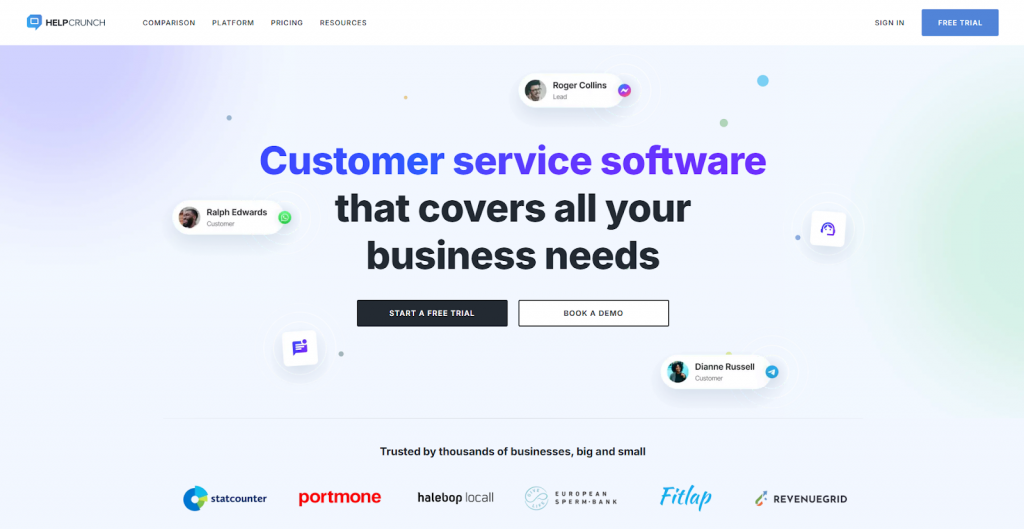
HelpCrunch is a customer communication platform built for teams that want to manage support, engagement, and messaging from one place. It combines live chat, email marketing, knowledge base, and AI-assisted support, making it a strong option for businesses looking to unify customer interactions without relying on multiple tools.
The platform includes a shared inbox with CRM-like features, automation for repetitive tasks, and multichannel messaging across web, email, and in-app chat. Teams can handle conversations, send targeted campaigns, and offer self-service support through a knowledge base. For businesses aiming to balance customer support with ongoing engagement, it provides a practical, all-in-one setup.
Pros:
- Built-in AI Agents trained on your docs, and custom data
- Unified inbox for chat, email, social media, and messengers
- Trigger-based messages for onboarding and retention
- Integrated knowledge base to reduce tickets
- Simple UI with fast setup and real-human support
Cons:
- No free plan (but free trial available)
- AI Agents require quality data sources to work well
Pricing:
- Starts at $15/month with AI tools and generous limits. Flexible add-ons available.
HelpCrunch is ideal for growing/scaling teams who want to automate support and streamline communications — all within one platform.
7. Yellow AI

Yellow.ai is an AI-powered conversational CX platform built for enterprises that need automation at scale. It offers omnichannel bot solutions across channels like WhatsApp, voice, web, and messaging apps, helping businesses manage large volumes of customer interactions through a single system.
The platform focuses on advanced automation using AI, natural language understanding, and workflow orchestration. It supports use cases across customer support, sales, and employee experience, along with integrations into enterprise systems. For organizations handling high interaction volumes and complex workflows, it provides a structured setup for managing conversations across multiple touchpoints.
Pros:
- Advanced natural language processing capabilities
- Supports voice bots in addition to text-based chatbots
- Offers solutions for both customer and employee experience
- Robust analytics and insights
- Seamless integration with various enterprise systems
Cons:
- Primarily focused on enterprise-level solutions, which may be overkill for smaller businesses
- Steep learning curve for utilizing all features
- Pricing is not transparent and likely on the higher end
Pricing:
- Yellow.ai doesn’t publicly disclose pricing. They offer custom enterprise pricing based on specific business needs and usage.
Yellow.ai is a powerful option for large enterprises looking for a comprehensive conversational AI solution. Its ability to handle complex scenarios and integrate with existing systems makes it a strong contender in the enterprise space. However, smaller businesses might find it overwhelming and potentially cost-prohibitive.
8. Botsurfer

Botsurfer is a no-code chatbot builder designed for teams that want to launch chatbots quickly without technical setup. It focuses on simplicity, making it easy to create and deploy bots for basic customer interactions, lead capture, and support use cases.
The platform offers a visual builder to design conversation flows and connect them to websites or messaging channels. It works well for small teams and businesses that need fast deployment with minimal complexity. For straightforward chatbot use cases without advanced customization, it provides a practical starting point.
Pros:
- Intuitive, code-free bot-building interface
- Affordable pricing plans, including a free tier
- Supports multiple languages
- Easy integration with popular messaging platforms
- Decent analytics features
Cons:
- Limited advanced features compared to some competitors
- May not be suitable for complex enterprise needs
- Customer support can be slow at times
Pricing:
- Botsurfer offers a free plan with basic features. Paid plans start at $29/month for the Starter plan, with higher tiers available for more advanced features.
Botsurfer is an excellent choice for small to medium-sized businesses looking for a straightforward chatbot solution. Its affordability and ease of use make it accessible to those new to chatbot technology. However, larger businesses or those needing more sophisticated features might find it lacking.
9. ManyChat

ManyChat is a chat marketing platform focused on customer engagement and automation across social channels. It is widely used for building chatbots on Facebook Messenger, Instagram, and WhatsApp, helping businesses manage conversations, capture leads, and run marketing campaigns from one place.
The platform includes a visual flow builder to create automated sequences for promotions, follow-ups, and customer interactions. It also supports broadcasts, audience segmentation, and integrations with marketing tools. For businesses focused on social media growth and conversational marketing, it provides a simple and effective setup.
Pros:
- Specializes in social media chatbots
- Offers a free plan with basic features
- Strong integration with Facebook ads
- User-friendly flow builder
- Good for marketing automation and lead generation
Cons:
- Limited functionality outside of Facebook and Instagram
- Can be challenging to create complex conversation flows
- Some advanced features are only available on higher-tier plans
Pricing:
- ManyChat has a free plan with limited features. Paid plans start at $15/month for the Pro plan, with pricing scaling based on the number of subscribers.
ManyChat excels in social media marketing and engagement, making it a top choice for businesses heavily invested in Facebook and Instagram. Its focus on these platforms, however, may be limiting for companies looking for a more versatile, multi-channel chatbot solution.
10. Botpress

Botpress is an open-source chatbot platform designed for teams that need flexibility and control over how their bots are built and deployed. It offers both cloud and self-hosted options, making it suitable for developers and businesses with specific customization or infrastructure requirements.
The platform provides tools for building advanced conversational flows, integrating with external APIs, and managing complex logic. With support for custom code, workflows, and deployment environments, it works well for teams building tailored chatbot solutions. For projects that require deeper customization beyond no-code builders, it offers a more flexible approach.
Pros:
- Open-source with a strong community
- Supports natural language understanding
- Offers both visual flow editor and code-based customization
- Can be self-hosted for complete control over data
Cons:
- Steeper learning curve, especially for non-technical users
- Self-hosting requires technical expertise
- Community support may not be as robust as dedicated customer support
Pricing:
- Botpress is open-source and free for self-hosting. Cloud plans start at $50/month for the Developer plan, with custom pricing for enterprise needs.
Botpress is an excellent choice for businesses with technical resources that want full control over their chatbot solution. Its open-source nature allows for extensive customisation, but this comes at the cost of complexity, making it less suitable for those seeking a simple, out-of-the-box solution.
11. Botsify

Botsify is a chatbot platform designed for teams that want to build and launch bots quickly without complex setup. It focuses on ease of use, offering a simple interface to create conversational flows for customer support, lead generation, and basic automation.
The platform supports deployment across multiple channels, including websites and messaging apps, along with pre-built templates to speed up setup. It also includes basic integrations and human handoff features for handling more complex queries. For businesses looking for a straightforward, no-code chatbot solution, it provides a practical and accessible option.
Pros:
- Supports multiple languages and channels
- Offers templates for various industries and use cases
- Includes a built-in live chat feature
Cons:
- Limited advanced AI capabilities compared to some competitors
- Some users report occasional reliability issues
- Higher-tier plans can be expensive for small businesses
Pricing:
- Botsify’s plans start at $49/month for the Personal plan. They also offer custom enterprise solutions with pricing based on specific requirements.
Botsify is well-suited for small to medium-sized businesses looking for a straightforward chatbot solution. Its multi-channel support and industry-specific templates make it easy to get started quickly. However, businesses requiring more advanced AI features might find it somewhat limiting.
12. Chatfuel

Chatfuel is a chatbot platform originally built for Facebook Messenger and now extended to support additional channels like Instagram and WhatsApp. It is widely used for creating bots that handle customer interactions, lead capture, and automated responses across social platforms.
The platform provides a visual builder to design conversation flows, along with tools for broadcasting messages, automating replies, and integrating with marketing systems. It works well for businesses focused on social media engagement and simple automation. For teams looking to launch bots quickly on social channels, it offers a straightforward setup.
Pros:
- Easy-to-use visual bot builder
- Good integration with Facebook ads and other marketing tools
- Supports multiple languages
Cons:
- limited to features
- Primarily focused on Facebook, with limited functionality on other platforms
- Can be challenging to create complex conversation flows
Pricing:
Chatfuel offers a free plan with basic features. Paid plans start at $15/month for the Pro plan, with custom pricing for enterprise-level needs.
Chatfuel is an excellent choice for businesses heavily invested in Facebook marketing and e-commerce. Its strengths lie in lead generation and customer engagement on social media platforms. However, companies looking for a more versatile, multi-channel solution might find it somewhat restrictive.
Tidio vs Alternatives: Quick Comparison Table
Here’s a quick comparison of all 12 Tidio alternatives:
| Feature | YourGPT AI | Intercom | Gorgias | Sendbird | TARS | Yellow AI | HelpCrunch | Botsurfer | ManyChat | Botpress | Botsify | Chatfuel |
|---|---|---|---|---|---|---|---|---|---|---|---|---|
| Easy setup | Yes, no code setup | Moderate | Easy for eCommerce | Developer friendly | Easy, drag-and-drop | Enterprise setup needed | Simple onboarding | Very easy | Quick for social channels | Technical | Simple setup | Easy for FB Messenger |
| AI capabilities | Advanced, AI-first platform | Assistive AI | Automation-focused | AI add-ons | Basic AI | Enterprise-grade AI | AI Agents | Simple automation | AI for marketing | Developer-focused AI | AI with integrations | Basic AI |
| Customization | Advanced workflows and APIs | Apps and webhooks | Macros and automation | Flexible messaging API | Templates and flows | Extensive enterprise options | Chat and email customization | Flow builder | Channel-specific customization | Full developer control | Industry templates | Basic options |
| Omnichannel | Web, WhatsApp, IG, Slack, Telegram, email, voice | Email, chat, product tours | Email, chat, social | Chat, voice, video | Web and landing pages | Web, messaging, voice | Web, email, chat widgets | Web chat | Facebook, IG, WhatsApp | Web and messaging channels | Web, Messenger, WhatsApp | Facebook Messenger |
| Unified inbox | Yes | Yes | Yes | Messaging console | No | Yes | Live chat inbox | Basic inbox | DM-focused | Team inbox | Multi-channel inbox | Chat-only |
| Best fit | SMBs to enterprises adopting AI-first automation | SaaS and large support teams | eCommerce brands | Apps needing scalable chat | Lead generation and support | Enterprise organizations | Teams needing omnichannel support | Small teams | Social media marketers | Developers and custom builders | SMBs and education | Messenger-focused businesses |
FAQ
What is Tidio? ▼
Tidio is a customer service and communication platform that offers live chat and chatbots. It enables businesses to interact with website visitors in real-time, automate responses to common queries, and manage customer communications effectively.
What are the best Tidio alternatives for 2026? ▼
The best Tidio alternatives for 2026 depend on your specific needs. You can Consider the following options:
- YourGPT AI Chatbot: The best AI alternative to tidio, Known for its advanced AI capabilities and omni-channel integration support.
- Intercom: All-in-One Platform for Customer Support, Sales, and AI Automation.
- Yellow AI: Provides robust enterprise-level solutions with advanced natural language processing.
Which chatbot alternative should I choose for my business? ▼
The best chatbot alternative depends on your specific business needs. For advanced capabilities and multi-language support, YourGPT Chatbot might be the ideal choice.
How does YourGPT Chatbot compare to other AI chatbots? ▼
YourGPT Chatbot stands out with:
- AI-Powered Conversations: Utilizes advanced AI models and natural language processing for effective interactions.
- Multi-Source Data Integration: Pulls information from various sources to provide comprehensive responses.
- Omnichannel Support: Integrates with platforms like WhatsApp, Messenger, and Instagram.
- API Calling: Supports API calls and functions for specific use cases.
Can chatbot platforms integrate with existing business systems? ▼
Yes, modern chatbot platforms offer integration capabilities. For instance, YourGPT Chatbot integrates with various messaging platforms and allows connections to systems through API calls and code execution, ensuring a seamless data retrieval and customer experience.
How important is customization in a chatbot platform? ▼
Customization is essential for aligning the chatbot with your brand identity and specific business needs. Look for platforms that offer flexible customization options, allowing you to tailor the chatbot’s appearance, conversation flows, and functionalities.
How can chatbots contribute to lead generation? ▼
Chatbot platforms, such as YourGPT Chatbot, offer features for lead generation. These include requiring visitors to complete a form before engaging with the chatbot or integrating with CRM systems to capture and qualify leads, turning interactions into business opportunities.
What are the benefits of multi-channel support in chatbot platforms? ▼
Multi-channel support allows businesses to provide consistent customer service across various platforms, such as WhatsApp, Telegram, Slack, and social media. This ensures customers can engage through their preferred method, enhancing overall engagement and satisfaction.
What are the key features to look for in a Tidio alternative? ▼
When evaluating Tidio alternatives, consider the following features:
- AI-powered chatbots: Advanced AI to improve user interactions.
- Omnichannel support: Consistent experience across multiple platforms.
- Customization options: Flexibility to match the chatbot with your specific needs.
- Scalability: Capability to grow with your business.
- Advanced features: Multi AI model, code execution, multi-source data integration, and intent-based dynamic flows.
Conclusion
Choosing the right customer support tool can greatly impact your efficiency and customer satisfaction.
When evaluating these alternatives to Tidio, it is important to find the right balance between comprehensive features, ease of use, and effective customer interactions.
In 2026, businesses prefer platforms like YourGPT as the best AI alternatives to Tidio, offering robust features such as personalised & 24/7 support.
Each tool offers unique features, so consider what best meets your specific needs and goals.
Evaluate these options thoroughly to enhance your customer interactions and achieve your business objectives.
Turn Every Customer Conversation into an Opportunity
See how AI Chatbot can help you connect more deeply and effectively with your customers.
No credit card • 7 days full access
Leave a Reply