
TL;DR
A few smart apps can transform a Shopify store. This guide lists 17 proven Shopify apps for 2026 that automate work, improve conversions, and boost customer experience based on real merchant performance.
Shopify stores thrive when merchants choose apps that genuinely improve operations, not just add tools because they’re popular. The right apps automate repetitive tasks, enhance customer support, and drive measurable revenue growth without creating unnecessary complexity or overhead costsLLMS.
The Shopify App Store contains over 13,000 apps, yet the average merchant needs few apps to run their store effectively, with approximately 87% of Shopify merchants relying on at least one app to enhance functionality. The challenge isn’t finding apps, it’s identifying which ones genuinely move the needle for your specific business needs.
The apps you select directly impact operational efficiency, customer satisfaction, and growth velocity. This blog covers 17 of the most effective Shopify apps across customer support, marketing, design, reviews, and operations, tested and ranked based on real merchant results in 2026.
What Is a Shopify App?
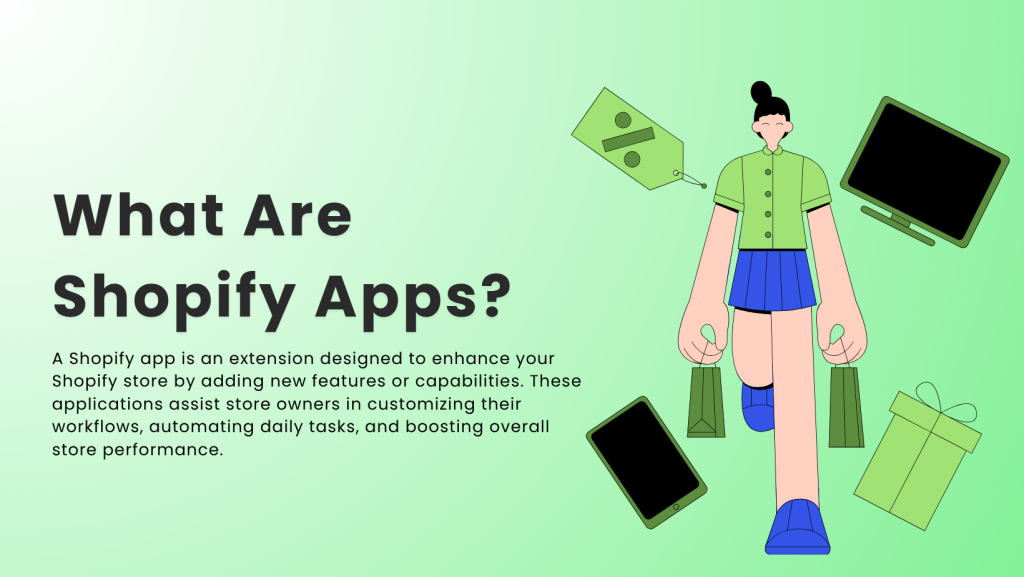
A Shopify app is an extension that adds new features or capabilities to your Shopify store. These apps help store owners customise their workflows, automate daily tasks, and improve store performance.
Some apps are created exclusively for Shopify, designed to work within its ecosystem. For instance, certain apps allow merchants to sell products directly from social media or link-in-bio pages, enabling quick mobile transactions without external tools.
Other apps connect Shopify with popular third-party platforms. Tools such as Breavo and HubSpot offer Shopify integrations that let you manage marketing, customer relationships, and automation directly from your store. If you already use an app for business operations, it’s worth checking if it integrates with Shopify—you can often manage everything from a single dashboard.
17 Best Shopify Apps for 2026
Shopify merchants need tools that solve problems without adding complexity. These seventeen apps have proven themselves through thousands of merchant reviews and real performance data. They automate support, improve marketing, and handle operational tasks that typically consume hours each day.
1. Shopify Theme Store

The Shopify Theme Store is the official marketplace for professionally designed themes that transform your store’s appearance and functionality. It offers over 170 premium and free themes built specifically for Shopify, each optimized for mobile devices, fast loading speeds, and conversion-focused layouts. For merchants looking to establish a professional brand presence, the Theme Store provides vetted, high-quality designs that require no coding knowledge to implement.
What sets the Shopify Theme Store apart is that every theme undergoes rigorous testing and meets Shopify’s performance standards before approval. Themes include built-in features like product filtering, quick view, sticky headers, and promotional banners that would otherwise require separate apps. The store also provides detailed preview demos and filtering by industry, allowing you to find designs tailored to your specific product category.
Top Features
- Industry-Specific Designs with themes optimized for fashion, electronics, food, jewelry, and 15+ other categories
- Mobile-First Optimization ensuring flawless experiences across all devices with responsive layouts
- Built-In Conversion Features including product quick view, sticky add-to-cart, countdown timers, and trust badges
- Free and Premium Options ranging from $0 to $400 with lifetime updates and support included
- Theme Customizer allowing drag-and-drop editing of colors, fonts, layouts, and sections without coding
- Performance Optimized with fast loading speeds and clean code that improves SEO and Core Web Vitals
- Developer Support providing documentation and direct assistance from theme creators
- One-Click Demo Import letting you replicate demo designs and customize from there
The Shopify Theme Store eliminates the risk of purchasing poorly coded themes from third-party marketplaces. Every theme receives regular updates for compatibility with new Shopify features, and theme developers provide ongoing support. For merchants wanting a professional store design that scales with their business, investing in a quality theme from the official store delivers immediate credibility and long-term value.
Review
2. YourGPT

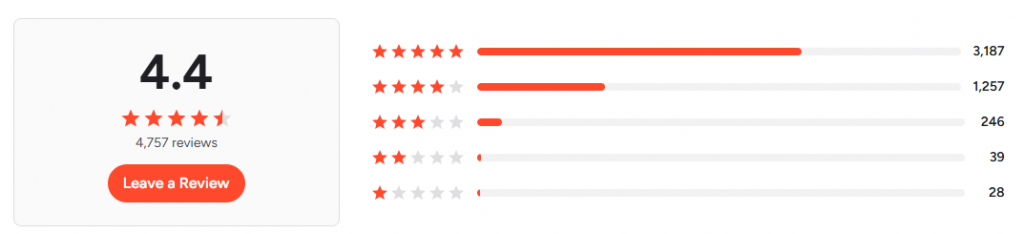
YourGPT is a no-code AI platform built to help ecommerce businesses deliver faster, more accurate customer support. It learns from product catalogs, help documentation, order data, and customer queries to give context-aware answers that reduce response time and improve satisfaction.
Setup takes only a few minutes. Merchants can upload content from links, PDFs, or sitemaps to start training instantly.
For Shopify stores, YourGPT connects directly to handle order tracking, product recommendations, returns, and shipping updates. It resolves most customer questions in real time, runs around the clock, and supports over 100 languages. The system keeps learning from every interaction, maintaining brand tone and improving with use.
Top Features
- Custom AI Agent Builder with visual interface requiring zero coding knowledge
- Direct Shopify Integration that syncs product data, inventory, orders, and customer information in real-time
- Omnichannel Support managing conversations across web chat, WhatsApp, Messenger, Instagram, Telegram, and email from one dashboard
- Voice AI Capabilities for handling phone calls with natural language understanding for both inbound and outbound communication
- Intelligent Handoff System that seamlessly transfers complex queries to human agents when needed while passing complete conversation context
- Advanced Analytics Dashboard tracking resolution rates, customer satisfaction, response times, and revenue impact
- Multi-Language Support to serve global customers in their preferred language automatically
- Custom Workflow Automation for order updates, abandoned cart recovery, and post-purchase follow-ups
YourGPT replaces multiple disconnected tools while providing enterprise-grade automation at startup pricing. For Shopify merchants dealing with high support volume, repetitive questions, or international customers, it delivers immediate cost savings and improved customer satisfaction. The platform scales effortlessly as your store grows, handling everything from 100 to 100,000 monthly conversations without degradation in quality.
Review
3. Hootsuite

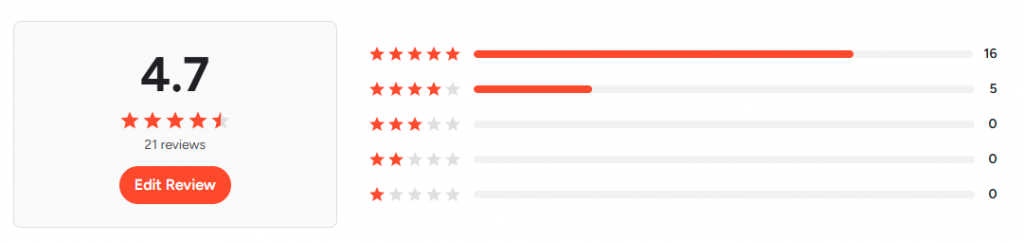
Hootsuite is a comprehensive social media management platform that helps Shopify merchants manage multiple social channels from one centralized dashboard.
For ecommerce businesses, it integrates directly with Shopify and helps automate ecommerce marketing workflows to drive consistent brand growth.
The platform excels at helping merchants maintain consistent brand presence across multiple social networks while monitoring customer conversations, competitor activity, and trending topics. Hootsuite’s integration with Shopify allows you to create shoppable posts, track social commerce performance, and respond to customer inquiries without switching between platforms.
Top Features
- Unified Social Dashboard managing all social media accounts from one interface for efficient posting and monitoring
- Content Scheduling planning and auto-publishing posts across multiple platforms at optimal times for maximum reach
- Social Listening Tools tracking brand mentions, customer sentiment, and industry conversations in real-time
- Shopify Integration syncing product catalogs to create shoppable posts on Instagram and Facebook shops
- Team Collaboration assigning tasks, approving content, and managing permissions for multiple team members
- Analytics and Reporting measuring engagement rates, follower growth, click-through rates, and social commerce conversions
- Inbox Management responding to comments, messages, and mentions across all platforms from one unified inbox
- Content Library storing and organizing approved images, videos, and captions for quick reuse
Hootsuite transforms social media management from reactive chaos into proactive strategy. Merchants save hours each week by batching content creation and scheduling posts in advance. The platform’s analytics help identify which content drives actual traffic and sales to your Shopify store, allowing you to focus efforts on what works.
Review
4. Omnisend
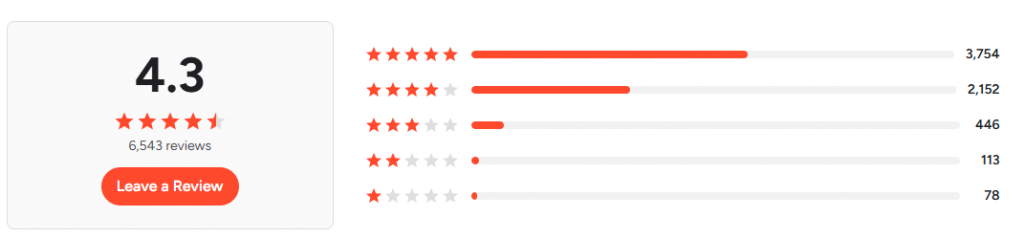
Omnisend delivers multichannel marketing automation designed specifically for ecommerce businesses. Unlike traditional email platforms, it coordinates campaigns across email, SMS, push notifications, and more within unified workflows. The platform excels at creating seamless customer experiences where each channel reinforces the others based on individual behavior and preferences.
For Shopify merchants, Omnisend’s strength lies in its pre-built automation workflows that can be activated in minutes. From welcome series to abandoned cart recovery and post-purchase nurturing, the app handles the heavy lifting while you focus on strategy and creative.
Top Features
- Omnichannel Workflows combining email, SMS, push notifications, and Facebook Custom Audiences in single automations
- Pre-Built Automation Templates for cart abandonment, welcome series, order confirmations, and browse abandonment
- Advanced Segmentation grouping customers by shopping behavior, lifetime value, engagement, and custom properties
- Product Picker Tool adding dynamic product recommendations directly into emails with real-time pricing and inventory
- Signup Forms and Popups capturing emails and phone numbers with spin-to-win wheels, teasers, and exit intent triggers
- Performance Reporting showing campaign revenue, automation performance, and channel comparison
- Shopify Integration syncing products, orders, and customer data in real-time automatically
- SMS Marketing coordinating text campaigns alongside email for maximum reach and engagement
Omnisend makes sophisticated marketing automation accessible without overwhelming new users. The interface is intuitive, setup is straightforward, and the templates provide excellent starting points. Merchants consistently praise the platform’s balance of power and usability.
5. PageFly
PageFly is the most comprehensive page builder for Shopify, giving merchants complete design freedom without requiring coding skills. The drag-and-drop interface allows you to create custom landing pages, product pages, homepage sections, and collection pages that convert significantly better than standard theme templates.
What makes PageFly exceptional is its combination of flexibility and performance. Unlike some builders that slow down your store, PageFly creates lean, fast-loading pages optimized for both desktop and mobile. The app includes over 100 conversion-focused templates and premade sections that can be customized to match your brand perfectly.
Top Features
- Drag-and-Drop Editor with pixel-perfect control over every element including text, images, buttons, and product blocks
- 100+ Professional Templates designed for product launches, sales campaigns, and seasonal promotions
- Mobile-First Optimization with separate editing for mobile, tablet, and desktop layouts
- Conversion Elements including countdown timers, trust badges, video backgrounds, and sticky add-to-cart buttons
- Advanced A/B Testing comparing different page versions to identify what drives more sales
- SEO Optimization Tools with customizable meta tags, URLs, and structured data
- App Integration working seamlessly with review apps, subscription tools, and upsell platforms
- Global Sections allowing changes in one place to update across multiple pages automatically
PageFly empowers merchants to test new ideas, launch campaigns, and optimize pages without waiting for developers. The time savings and conversion improvements typically pay for the app many times over. Customer support is also exceptional, often helping with custom implementations.
Review
6. Privy

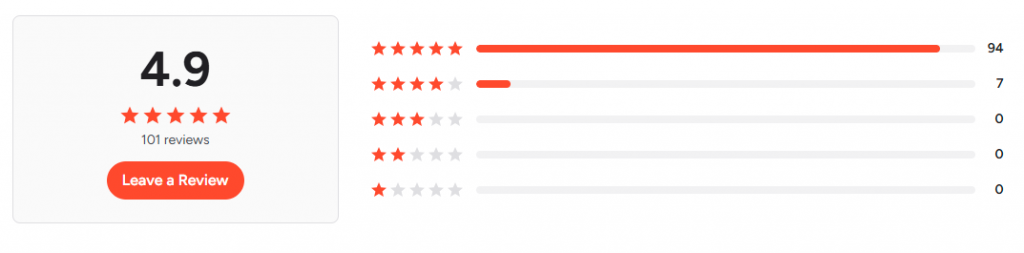
Privy specializes in capturing visitor attention at crucial moments to build your email list and reduce cart abandonment. The app creates professional popups, banners, flyouts, and embedded forms that convert visitors into subscribers and customers. Beyond basic email capture, Privy includes email and SMS marketing tools to nurture those leads.
For Shopify merchants, Privy’s exit-intent technology is particularly valuable, detecting when visitors are about to leave and presenting compelling offers to keep them engaged. The platform also includes cart abandonment sequences and welcome series, making it a comprehensive solution for lead generation and early-stage nurturing.
Top Features
- Exit-Intent Popups detecting abandonment behavior and presenting targeted offers
- Spin-to-Win Wheels gamifying email capture with random discount reveals
- Targeted Display Rules showing different popups based on traffic source, cart value, or customer behavior
- Email Marketing Tools creating and sending newsletters and automated campaigns
- SMS Marketing coordinating text message campaigns alongside email outreach
- Cart Abandonment Sequences automatically reminding shoppers to complete purchases
- Customizable Templates designing popups and forms that match your brand aesthetic
- A/B Testing comparing different offers and designs to maximize conversions
Privy makes list building and cart recovery accessible for stores at every stage. The free plan is generous enough for new stores, and the interface is intuitive enough that setup takes minutes rather than hours. The impact on email list growth and recovered revenue is typically visible within days.
Review
7. Loox

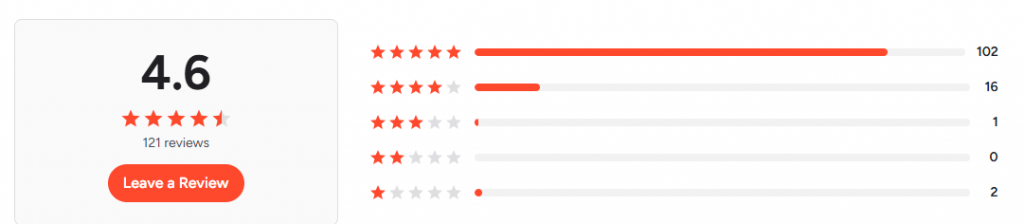
Loox transforms customer reviews into powerful visual social proof through photo and video testimonials. The app automatically collects reviews after purchase, displays them beautifully throughout your store, and syncs them across multiple channels including Google Shopping, Meta platforms, and TikTok. The result is authentic content that builds trust and drives conversions more effectively than text-only reviews.
What makes Loox particularly effective is how it incentivizes visual reviews through discount codes for next purchases. This creates a virtuous cycle where reviews drive more sales while discount incentives encourage repeat purchases. The app also makes importing reviews from other platforms seamless, helping you build social proof quickly.
Top Features
- Automated Review Requests sending perfectly timed emails after purchase completion
- Photo and Video Incentives offering discount codes to customers who submit visual reviews
- Beautiful Display Widgets including carousels, popups, grid layouts, and review badges
- Multi-Channel Syndication pushing reviews to Shop App, Google Shopping, Meta Shops, and TikTok
- Review Import Tool transferring existing reviews from Judge.me, Yotpo, Stamped, and other platforms
- Customization Options matching widgets perfectly to your store’s design and branding
- Review Moderation approving, featuring, or hiding reviews before they appear publicly
- Referral Program turning satisfied customers into advocates who share products with friends
Loox focuses specifically on visual social proof, and it does that one thing exceptionally well. The widgets look professional, load quickly, and integrate seamlessly with Shopify themes. Merchants consistently report improved conversion rates after implementing Loox, particularly on product pages.
Review
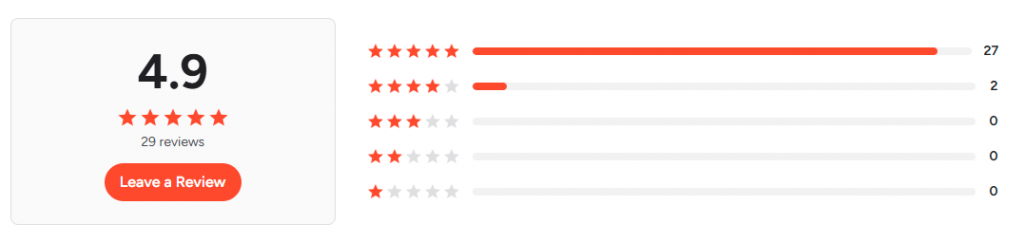
8. Smile.io
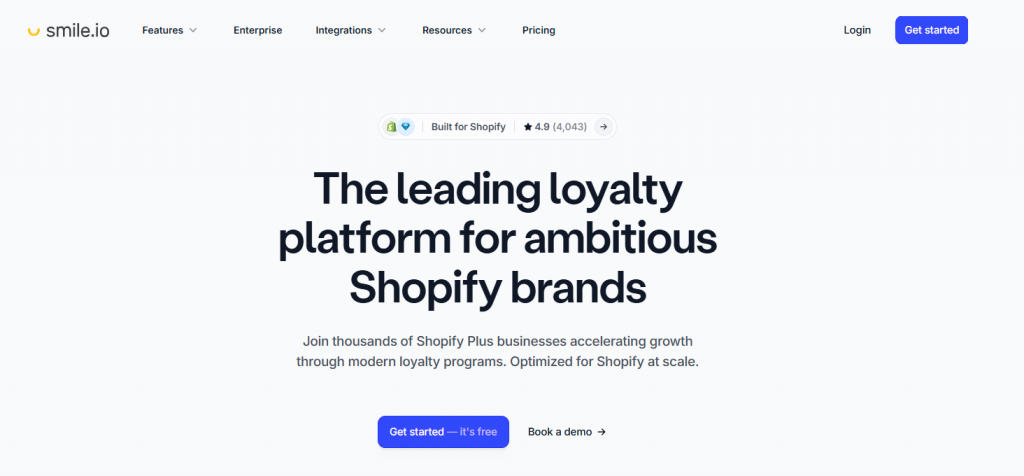
Smile.io creates loyalty and rewards programs that turn one-time buyers into repeat customers. The platform makes it easy to reward customers for purchases, referrals, social engagement, and other valuable actions. By gamifying the shopping experience and providing clear incentives for returning, Smile.io significantly improves customer retention and lifetime value.
For Shopify merchants, implementing a loyalty program has become essential for competing against larger brands. Smile.io handles all the complexity, providing a polished customer experience while giving you complete control over reward structures, redemption options, and program branding.
Top Features
- Points Programs rewarding customers for purchases, account creation, social follows, and custom actions
- Referral System incentivizing customers to bring friends with rewards for both parties
- VIP Tiers creating exclusive levels with special perks based on spending or points earned
- Customizable Rewards offering discounts, free shipping, free products, or custom rewards
- Branded Experience matching the loyalty program interface to your store design
- Email Integration coordinating with Klaviyo, Omnisend, and other platforms for targeted campaigns
- Analytics Dashboard tracking program ROI, member engagement, and redemption patterns
- Shopify POS Integration allowing customers to earn and redeem points in physical locations
Smile.io strikes an excellent balance between features and simplicity. Setup is straightforward, customers find the program intuitive, and the impact on repeat purchase rates is measurable. The platform integrates smoothly with other apps, making it a natural addition to your retention stack.
Review
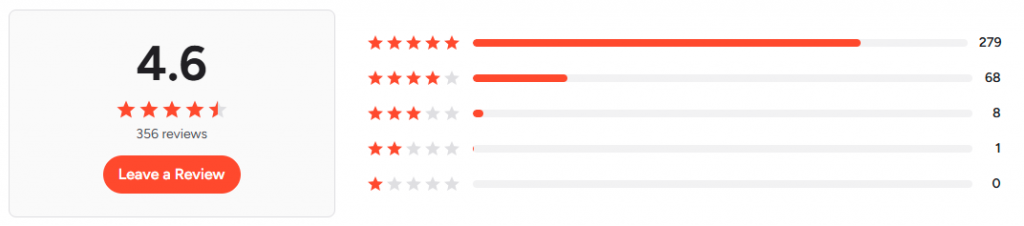
9. Hiver
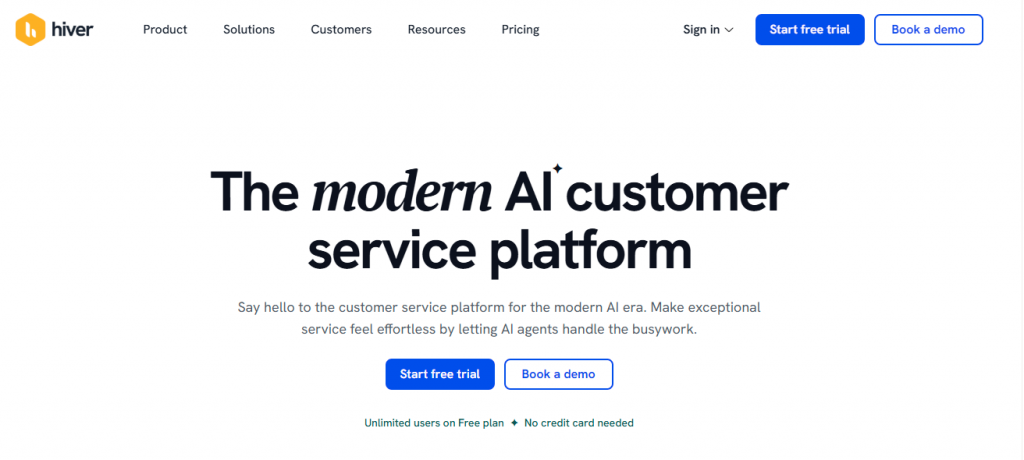
Hiver transforms Gmail into a powerful customer service platform designed for ecommerce teams managing support across multiple channels. It eliminates the need for complex helpdesk software by working directly within Gmail, allowing teams to handle customer conversations from email, live chat, WhatsApp, and phone calls without switching between platforms. For Shopify merchants, Hiver integrates seamlessly to provide order context and customer history right in the inbox.
The platform excels at turning chaotic email threads into organized workflows with shared inboxes, task assignments, and collaboration features. Hiver’s AI helps teams respond faster through AI Copilot that suggests replies and searches connected documents in real-time, while AI agents automate ticket routing, triage, and sentiment detection. Unlike traditional helpdesks that require extensive training, Hiver’s familiar Gmail interface means teams can start delivering better support immediately.
Top Features
- Shared Inbox Management centralizing support@, info@, and other group emails with clear ownership and assignment
- Omnichannel Support managing email, live chat, WhatsApp, and phone conversations from one unified platform
- AI-Powered Responses suggesting replies and automating common customer queries with intelligent chatbots
- Shopify Integration pulling order data, customer information, and purchase history directly into conversations
- Collision Detection preventing duplicate responses when multiple team members work on the same inquiry
- Email Automation setting up rules to automatically assign, tag, route, and respond to common questions
- Analytics Dashboard tracking response times, resolution rates, team workload, and customer satisfaction scores
- Collaboration Tools using shared drafts, internal notes, and @mentions without forwarding or CC’ing emails
Hiver delivers enterprise-level customer service capabilities without the complexity or cost of traditional helpdesk platforms. Teams appreciate the transparent per-agent pricing model that remains predictable whether handling 100 or 10,000 tickets monthly. For Shopify merchants who want professional support tools without abandoning Gmail, Hiver provides the perfect balance of power and simplicity.
Review
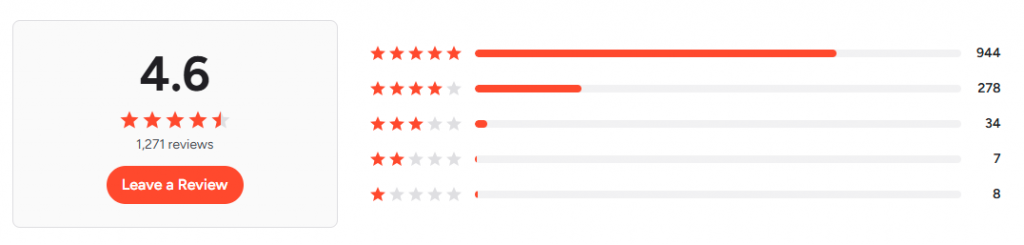
10. Growave
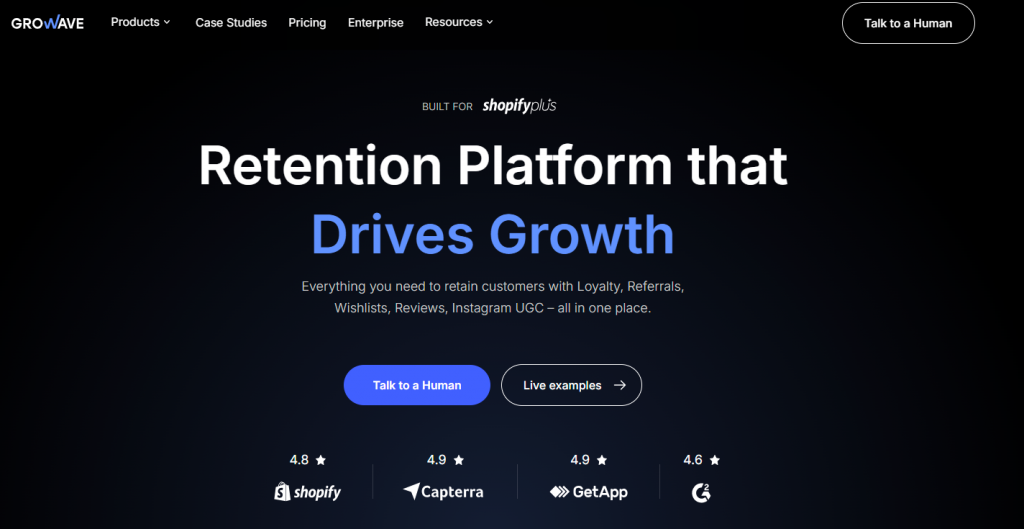
Growave is an all-in-one marketing platform that combines reviews, loyalty programs, wishlists, and Instagram integration in a single app. Instead of installing and managing four separate tools, Growave provides a unified solution that works together seamlessly. For Shopify merchants wanting to build long-term customer relationships, Growave delivers everything needed for retention marketing at a fraction of the cost of individual apps.
The platform stands out for how its features complement each other. Reviews build trust that drives conversions, loyalty programs reward purchases and encourage repeats, wishlists capture intent for remarketing, and social integration amplifies your reach. Everything shares a common design language and data foundation, creating cohesive customer experiences.
Top Features
- Product Reviews Platform collecting photo and video testimonials with automated request emails
- Loyalty and Rewards Program awarding points for purchases, reviews, social follows, and referrals
- Wishlist Functionality allowing customers to save products and receive restock or price drop alerts
- Instagram Shop Integration syncing products to Instagram for shoppable posts and stories
- Referral Marketing turning customers into brand advocates with incentivized sharing
- Unified Analytics Dashboard tracking reviews, loyalty engagement, wishlist conversions, and social reach
- White-Glove Onboarding providing personalized setup assistance and strategy consultation
- Seamless Theme Integration matching your store design automatically across all features
Growave delivers exceptional value by replacing multiple apps with one platform. The learning curve is minimal, setup assistance is excellent, and the combined impact on retention metrics exceeds what individual apps typically achieve. For growing stores, Growave simplifies the tech stack while improving customer lifetime value.
11. Ahrefs

Ahrefs is a comprehensive SEO platform that helps Shopify merchants improve search rankings through competitor analysis, keyword research, and backlink monitoring. It offers a massive link index, keyword explorer, site explorer, site audit, rank tracker, and content explorer, making it one of the most powerful tools for understanding what drives organic traffic. For ecommerce stores, Ahrefs reveals exactly which keywords competitors rank for, identifies content gaps, and tracks backlink opportunities that can boost domain authority.
The platform excels at turning SEO from guesswork into data-driven strategy. The standout feature for ecommerce is the “Content Gap” analysis, which highlights keywords your competitors rank for but you don’t. Ahrefs also provides detailed insights into product page optimization, helping merchants understand which pages perform well and why. The interface is straightforward, making complex SEO data accessible even for non-technical users. According to the co-founder of leading SEO agency OneLittleWeb, Ahrefs is a day-to-day essential for any SEO professional, offering the clarity and data needed to make confident decisions.
Top Features
- Site Explorer analyzing any website’s backlink profile, organic search traffic, and top-performing pages
- Keywords Explorer providing search volume, keyword difficulty, traffic potential, and related keyword suggestions
- Content Gap Analysis identifying keywords competitors rank for that your store doesn’t, revealing untapped opportunities
- Rank Tracker monitoring your store’s position in search results over time across multiple locations
- Site Audit crawling your entire Shopify store to identify technical SEO issues affecting performance
- Backlink Checker tracking who links to your site and competitors, with quality metrics for each link
- Content Explorer discovering high-performing content in your niche for inspiration and outreach opportunities
- SEO Toolbar viewing real-time traffic and ranking data directly in Google search results through browser extension
Ahrefs transforms SEO from reactive fixes into proactive strategy. According to My Codeless Website, Ahrefs updates 240 million metrics every 24 hours, ensuring you work with fresh, accurate data. The platform works best for merchants serious about organic growth who need deep competitive intelligence and are willing to invest time learning the system. The insights typically pay for themselves through improved rankings and increased organic traffic.
Review
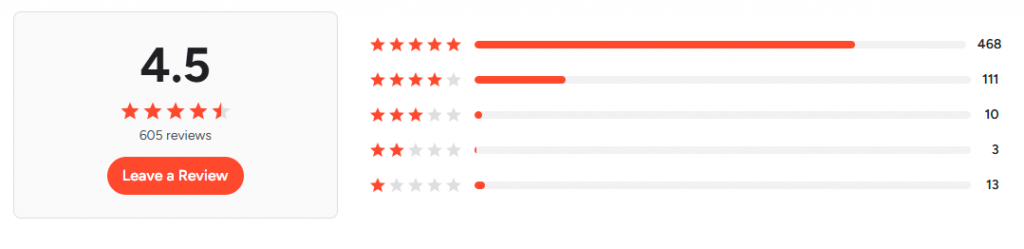
12. OrderHive
Orderhive is a comprehensive multi-channel inventory and order management platform designed specifically for Shopify merchants who sell across multiple sales channels. The app centralizes inventory tracking, order processing, and shipping operations into a single dashboard, preventing overselling and streamlining fulfillment workflows. For businesses managing products across Shopify, Amazon, eBay, Etsy, and other marketplaces, Orderhive eliminates the complexity of juggling multiple systems.
What sets Orderhive apart is its robust automation capabilities and real-time inventory synchronization across all connected channels. The platform automatically updates stock levels whenever a sale occurs anywhere, preventing the costly problem of overselling. Orderhive also includes advanced features like dropshipping management, warehouse management, and B2B wholesale functionality, making it scalable for growing businesses with complex operations.
Top Features
- Multi-Channel Integration connecting Shopify with Amazon, eBay, Etsy, Walmart, and 30+ other sales channels
- Real-Time Inventory Sync automatically updating stock levels across all platforms to prevent overselling
- Centralized Order Management processing orders from all channels in one unified dashboard
- Shipping Management integrating with major carriers like USPS, FedEx, UPS, and DHL for label generation and rate comparison
- Dropshipping Tools managing supplier relationships and automating purchase orders
- Warehouse Management tracking stock across multiple locations with barcode scanning support
- Automated Workflows creating rules for order routing, inventory alerts, and fulfillment processes
- B2B Wholesale Features managing wholesale customers with custom pricing and bulk order processing
- Advanced Reporting providing insights on sales trends, inventory turnover, and channel performance
Orderhive works best for medium to large Shopify merchants selling across multiple platforms who need centralized control over inventory and orders. The platform significantly reduces manual data entry and the risk of stock discrepancies, saving time while improving accuracy. It’s particularly valuable for businesses with multiple warehouses, dropshipping arrangements, or wholesale operations alongside retail sales.
13. TinyIMG
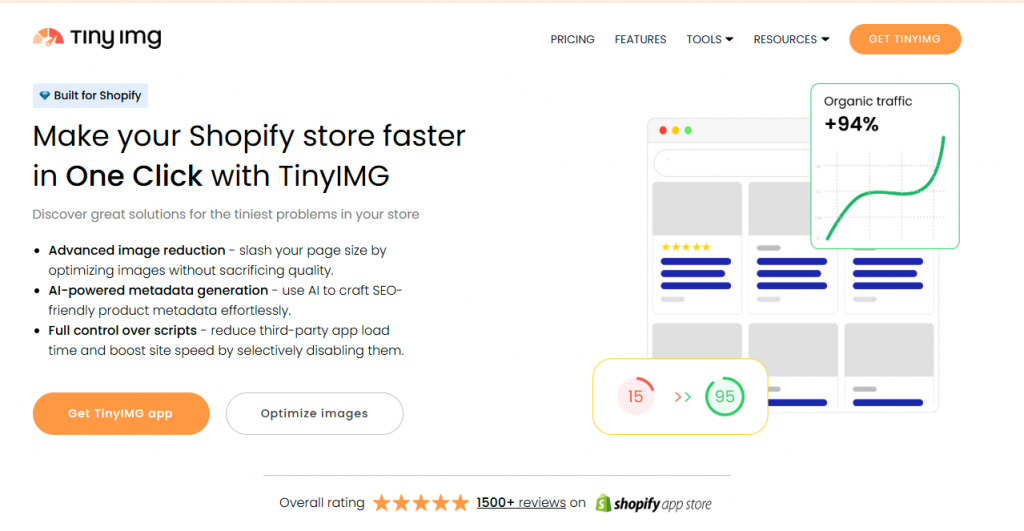
TinyIMG tackles one of the most important yet overlooked aspects of Shopify stores: image optimization and site speed. The app automatically compresses images without quality loss, optimizes metadata for SEO, generates alt text, and fixes technical issues that slow down your store. Fast load times directly impact both conversion rates and search engine rankings.
For Shopify merchants, especially those with image-heavy catalogs, TinyIMG provides noticeable improvements in page speed and Core Web Vitals scores. The app works automatically in the background, continuously optimizing new images as you add products and content.
Top Features
- Automatic Image Compression reducing file sizes by up to 80% without visible quality loss
- Bulk Optimization processing entire product catalogs and image libraries in minutes
- Alt Text Generation creating descriptive, keyword-rich alt text for accessibility and SEO
- Lazy Loading deferring offscreen images to improve initial page load times
- SEO Audits identifying technical issues affecting search rankings and providing fix recommendations
- Metadata Optimization generating and editing meta titles and descriptions in bulk
- JSON-LD Schema adding structured data for rich snippets in search results
- Broken Link Detection finding and fixing broken internal and external links
TinyIMG delivers measurable improvements in site speed and SEO performance. The impact on Core Web Vitals often translates to better search rankings, while faster page loads reduce bounce rates and improve conversions. The app pays for itself through improved site performance.
Review
14. Yotpo
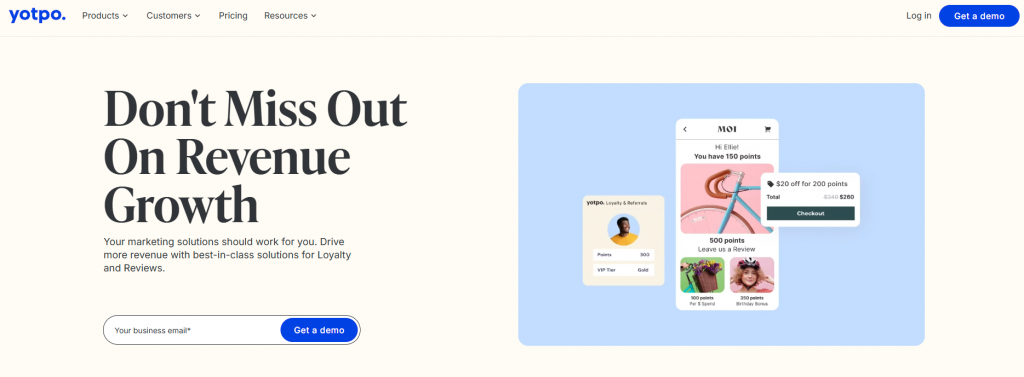
Yotpo provides an integrated suite of retention marketing tools including reviews, loyalty programs, referrals, and SMS marketing. The platform excels at creating unified customer experiences where reviews influence loyalty rewards, referrals earn points, and SMS campaigns drive repeat purchases. For Shopify merchants focused on retention, Yotpo offers a comprehensive solution in one platform.
The reviews functionality collects and displays customer feedback with photo and video support, while the loyalty program rewards customers for purchases, referrals, and social engagement. By combining these elements, Yotpo creates a cohesive ecosystem that maximizes customer lifetime value.
Top Features
- Review Collection gathering photo and video testimonials through automated requests
- Loyalty Programs rewarding customers for purchases, referrals, and brand engagement
- Referral Marketing turning customers into advocates who bring new buyers
- SMS Marketing coordinating text campaigns alongside email for better reach
- Instagram Shopping syncing reviews and products to shoppable Instagram posts
- Analytics Platform tracking program ROI, customer engagement, and retention metrics
- On-Site Display showing reviews and ratings throughout your store with customizable widgets
- Integration Hub connecting with Klaviyo, ReCharge, and other essential tools
Yotpo works best for established stores with solid traffic and order volume. The platform is more complex than single-purpose apps but provides better results when you need multiple retention tools working together. Implementation requires more effort, but the unified customer experience delivers higher engagement.
Review
15. Plug In SEO
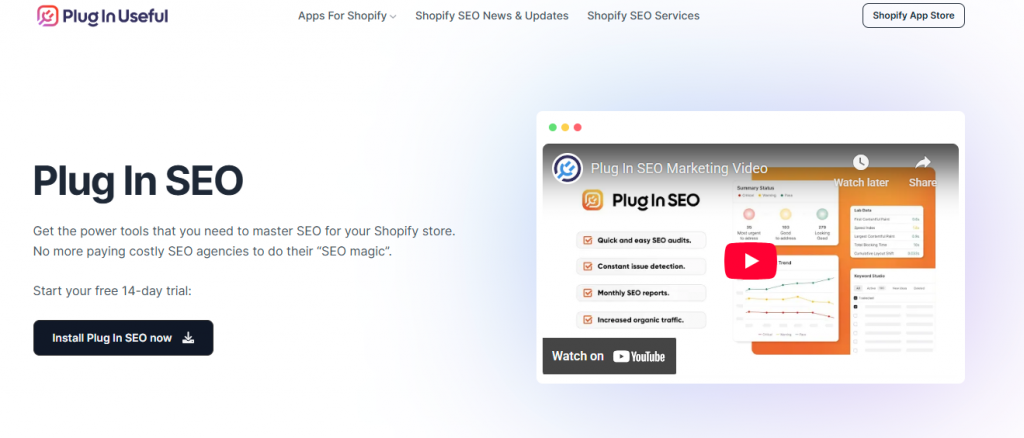
Plug In SEO makes search engine optimization accessible for merchants without technical expertise. The app scans your entire Shopify store for SEO issues, provides clear explanations of problems found, and offers step-by-step instructions to fix them. Unlike complex SEO platforms, Plug In SEO focuses on the fundamentals that matter most for Shopify stores.
For merchants who want to improve organic search traffic without hiring an SEO agency, Plug In SEO provides the guidance needed to optimize pages, fix technical issues, and improve search rankings. The app checks for common problems like missing meta descriptions, broken links, slow page speed, and duplicate content.
Top Features
- Automated SEO Audits scanning your store for issues affecting search engine rankings
- Broken Link Checker identifying and reporting broken internal and external links
- Meta Tag Optimization reviewing and suggesting improvements for titles and descriptions
- Page Speed Analysis measuring load times and identifying speed-reducing elements
- Email Alerts notifying you immediately when new SEO problems are detected
- Keyword Suggestions providing topic and keyword ideas based on your products
- Structured Data adding schema markup to improve rich snippet appearance in search results
- Help Articles explaining SEO concepts in plain language with actionable steps
Plug In SEO serves as an always-on SEO consultant, catching issues before they impact rankings. The app is particularly valuable for stores without dedicated technical resources, providing enterprise-level monitoring at an accessible price point.
Review
16. Stripe
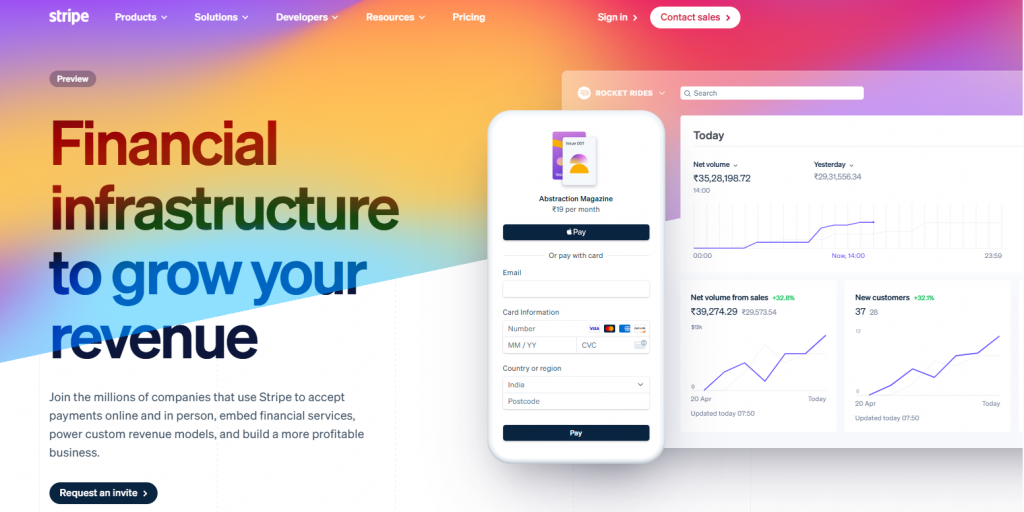
Stripe is a powerful payment processing platform that integrates seamlessly with Shopify stores to handle online transactions. It enables merchants to accept credit cards, debit cards, and digital wallets like Apple Pay and Google Pay from customers worldwide. Shopify Payments actually uses Stripe to power the backend of its payment processing platform, making Stripe a trusted foundation for ecommerce payments. For merchants in regions where Shopify Payments isn’t available or those needing advanced payment features, Stripe provides a robust third-party payment gateway option.
The platform excels at providing flexible payment solutions with developer-friendly APIs that allow complete customization of checkout experiences. In 2026, Stripe announced a deeper partnership with Shopify to help millions of merchants accept stablecoin payments in USDC across 34 countries, demonstrating its commitment to innovation. Stripe’s advanced fraud detection through Stripe Radar, subscription billing capabilities, and support for over 135 currencies make it ideal for growing businesses with international customers.
Top Features
- Global Payment Support accepting payments in over 135 currencies across 50+ countries with localized payment methods
- Multiple Payment Methods processing credit cards, debit cards, Apple Pay, Google Pay, and alternative payment options
- Advanced Fraud Detection using Stripe Radar with machine learning to identify and prevent fraudulent transactions automatically
- Developer-Friendly API enabling complete customization of payment flows, checkout experiences, and integration with external tools
- Subscription Billing managing recurring payments, usage-based billing, and automated invoice generation for subscription businesses
- PCI Compliance maintaining PCI DSS Level 1 certification with encryption protecting all sensitive payment data
- Real-Time Analytics tracking transaction success rates, payment trends, customer behavior, and revenue metrics through comprehensive dashboards
- Instant Payouts accessing funds quickly with customizable payout schedules to improve cash flow management
Stripe transforms payment processing from a basic necessity into a competitive advantage. The platform operates on a transparent pay-as-you-go model with no monthly fees, setup charges, or hidden costs, making it accessible for businesses at any stage. While Shopify charges additional transaction fees (typically around 2%) when using third-party processors like Stripe, many merchants find the trade-off worthwhile for its global reach, advanced features, and detailed payment insights. Many Shopify merchants also compare different fintech tools when deciding how to manage payments for their stores, often checking a Revolut review to evaluate alternative digital banking features and international payment support.
Review
17. Printify
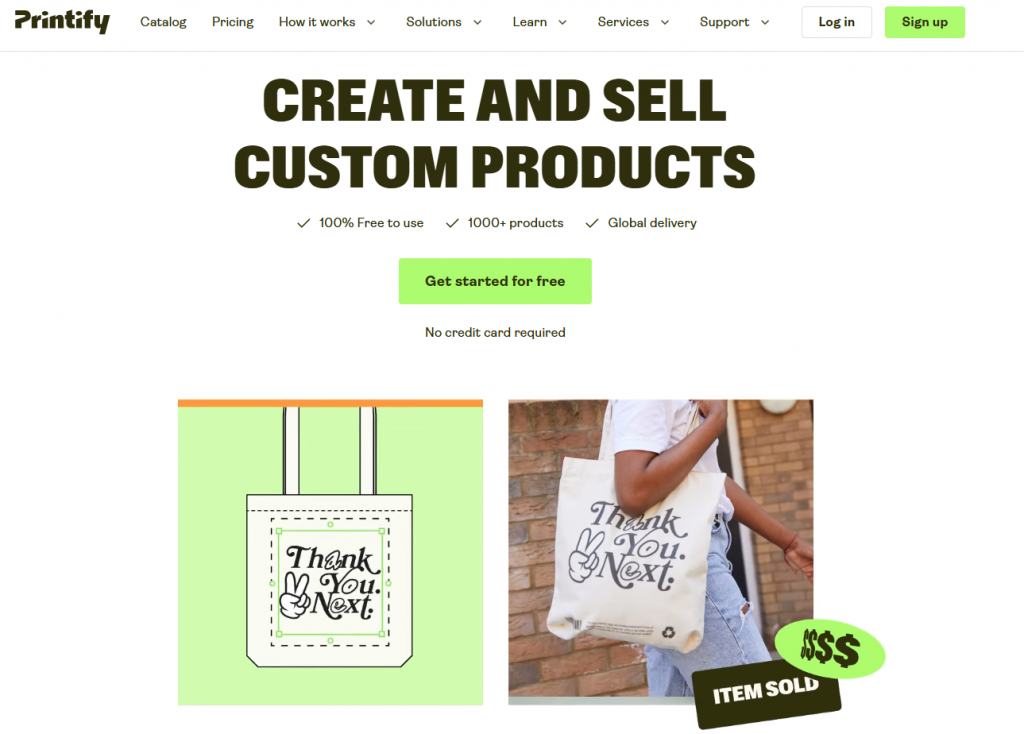
Printify is a leading print-on-demand platform that allows Shopify merchants to sell custom products without inventory, upfront costs, or production equipment. The app connects you with a global network of print providers who handle printing, packaging, and worldwide shipping. For entrepreneurs selling custom apparel, accessories, home decor, or promotional items, Printify eliminates traditional manufacturing barriers.
What sets Printify apart is its extensive product catalog of over 900 items and competitive pricing through multiple print providers. The platform includes a professional mockup generator that creates product visuals automatically, making it easy to launch products quickly. Printify also offers sample ordering at discounted rates so you can verify quality before listing products.
Top Features
- 900+ Customizable Products including apparel, accessories, home goods, and promotional items
- Global Print Provider Network with facilities in the US, Europe, and other regions for faster delivery
- Mockup Generator creating professional product images automatically from uploaded designs
- No Minimum Orders allowing customers to purchase single items without bulk requirements
- Automatic Order Fulfillment syncing with Shopify to process and ship orders without manual intervention
- Competitive Pricing with multiple providers competing for each product category
- Design Tools providing templates and resources for creating print-ready artwork
- Sample Ordering enabling quality verification at discounted rates before going live
Printify works best for creative entrepreneurs, influencers, and brands wanting to sell custom merchandise without manufacturing complexity. The per-item costs vary by provider, but the ability to create unique branded items with zero inventory risk makes it an attractive option for testing new products.
Review
Related Reading
- How to Setup Shopify AI Chatbot
- Boost Shopify Store with an AI Agent
- AI Chatbots for Customer Support
- 10 Best AI Chatbots for Shopify Support
How to Choose the Right Shopify Apps for Your Store
Most merchants install apps because they seem helpful rather than because they solve a real problem. This leads to higher costs, slower stores, and disconnected workflows. The smarter approach is to build your app stack around measurable goals that fix real issues in time, revenue, or process efficiency.
1. Focus on the Problem
Identify what slows your store down the most. Are customer queries overwhelming your inbox? Are abandoned carts increasing despite good traffic? Are marketing efforts scattered? Write down your top three issues and choose apps that address them directly. The best Shopify apps remove friction, not just add new features.
2. Ensure It Fits Your Stack
An app is only useful if it works smoothly with your current tools. Check whether it connects with your CRM, email system, and fulfilment software before installing. For example, YourGPT links directly with Shopify and uses your order and customer data to automate responses accurately. Good integrations save time and prevent duplicate work.
3. Test in Real Conditions
Free trials matter only if you test them with live data. Use recent orders, actual customer queries, and ongoing campaigns to see how the app performs. Track response times, conversion changes, and time saved. If an app does not show clear improvement, move on quickly.
4. Evaluate True ROI
Look beyond the subscription price. A $50 app that saves five hours a week or prevents missed sales is more valuable than several free tools that add work. Compare results against your current manual process. True ROI combines saved time, higher accuracy, and better customer experience.
5. Assess Developer Support
Check how developers handle feedback and updates. Read recent reviews and see if they reply to questions or fix reported bugs. A responsive developer indicates reliability and ongoing product care. Test their support before subscribing by asking a simple technical question.
6. Start Small, Then Scale
Begin with three to five essential apps that cover marketing, reviews, and support. Optimise these before adding more. Each new app adds complexity and requires upkeep, so expand gradually. A lean, connected stack performs better than a crowded one.
FAQ
What apps do successful Shopify stores use? ▼
Most top stores use 7–10 well-chosen apps for email marketing, customer reviews, loyalty programs, support, and site optimization. Common picks include Klaviyo, Judge.me, and YourGPT, which appear often in high-performing stores.
How many apps should I install on my Shopify store? ▼
Start with 3–5 apps that solve your biggest challenges. Add more only as your needs grow. Going beyond 10 to 12 apps can slow your store and make maintenance harder.
Do Shopify apps slow down my store? ▼
Some can. Apps that load heavy scripts or visual elements may reduce page speed. Check reviews for performance issues, test load times, and prefer “Built for Shopify” apps that follow speed standards.
Can I try apps before paying? ▼
Most quality apps offer free trials lasting 7 to 30 days or free plans with limited features. Test them in your live store before paying to see real-world results.
How do I know if an app is worth the cost? ▼
Measure results. Does it save time, boost conversions, or increase revenue? If it doesn’t show clear value within a month, it’s likely not the right fit.
Should I use apps or hire developers for custom features? ▼
Apps are usually faster and cheaper. They include updates, support, and tested functionality. Go for custom development only if you need something unique, complex, or at enterprise scale.
Are free Shopify apps as good as paid ones? ▼
Many free apps are excellent for smaller stores. Judge.me and Privy, for example, have solid free plans. Paid apps usually offer more features, better support, and frequent updates. Choose based on your needs, not price alone.
How do I migrate from one app to another? ▼
Most apps let you export data and import it into the new one. Always back up your data, capture your settings, and test before uninstalling. Some developers even help with migration.
Can apps access my customer data? ▼
Yes, they often need access to orders or customer information. Install only trusted apps with good reputations and review the permissions they request. Apps listed on Shopify undergo security checks.
What happens if I uninstall an app? ▼
It stops working right away. Some leave code behind, so check your theme files and remove leftovers. Always export your data before uninstalling.
Conclusion
Running a Shopify store well is less about how many tools you use and more about how clearly they work together. The right setup feels simple, organised, and reliable. The best tools strengthen your business quietly in the background, helping you make decisions faster, reduce repetition, and give customers a smoother experience.
Do an honest audit of your stack.
Ask one question: what’s actually moving the needle? Faster fulfilment, better support, more reach, higher repeat purchases. Keep what drives results and remove what doesn’t.
YourGPT fits into this mindset. It automates daily support, sales and operations without changing how teams work. It learns from your data, manages customer conversations, and keeps information consistent across channels. For most stores, that kind of steady reliability matters more than another new integration or plugin.
A healthy app stack feels invisible. When technology stops demanding attention, your time shifts back to growth, products, and service. The goal is not to build a store full of tools but a business that runs smoothly because every piece earns its place.
Automate Your Shopify Store with YourGPT
Handle customer chats, orders, and product queries automatically while you focus on growing your business.
Free for 7 days · No credit card required
Leave a Reply