Ecommerce in 2026 is thriving. Online stores are serving global customers, selling across multiple channels, and offering highly personalized shopping experiences. A big part of this progress comes from AI agents.
These intelligent assistants are changing how businesses connect with shoppers. They can answer questions instantly, recommend products based on behavior, track orders in real time, and manage conversations on platforms like WhatsApp, Instagram, and Messenger. For ecommerce brands, AI agents make it possible to scale customer support and sales without slowing down.
In this blog, we’ll look at the ten best AI agents for ecommerce in 2026, highlighting their features, advantages, and where they fit best for different types of online stores.
Why AI Agents Are Essential for Ecommerce Success in 2026
According to a 2024 Gartner report, 80% of customer service organizations will use AI by 2026, up from 47% in 2023.
The AI shift is no longer an optional add-on for ecommerce businesses. They are becoming a core part of how online stores deliver customer service, drive sales, and operate at scale. Here are the main reasons why brands are adopting them in 2026:
- Always available support: Customers expect immediate answers, and AI agents provide reliable assistance around the clock without delays.
- Lower operational costs: A single AI agent can manage thousands of conversations simultaneously, reducing the need for large human support teams.
- Personalized shopping experiences: Nearly 40% of shoppers are more likely to complete a purchase after a tailored AI interaction that recommends relevant products or answers specific questions.
- Revenue Growth: AI-driven personalization increases conversion rates by 10-15%, with companies excelling at AI personalization generating 30% more revenue than competitors. Smart product recommendations powered by AI can triple revenue and more than double conversion rates.
- Global accessibility: More than 75% of buyers prefer to shop in their native language. Multilingual AI agents help stores connect with customers worldwide without language barriers.
- Consistent brand experience: AI agents powered by natural language processing maintain the same tone, style, and accuracy in every interaction, building stronger trust and brand loyalty.
For ecommerce businesses, these benefits translate into higher customer satisfaction, improved conversion rates, and the ability to scale efficiently while keeping costs under control.
Quick Glance:
Choosing the right AI agent can transform how your store handles customer support and sales. Here’s a quick look at the top platforms and what makes each one stand out in 2026.
1. YourGPT: The best complete AI suite that helps businesses with customer support, sales, and business operations through real action-based automation.
2. Gorgias: Built specifically for ecommerce, especially Shopify, with deep integrations that allow teams to manage orders, process refunds, and resolve tickets from one place.
3. Yellow.ai: Enterprise-grade AI agent platform designed for large-scale automation, enabling businesses to handle complex customer journeys, transactions, and support workflows across channels.
4. Zendesk AI: Enterprise-grade AI layered on a powerful support system, designed to automate resolutions and handle high-volume customer operations.
5. Ada : Enterprise-grade AI platform that automates ecommerce customer support workflows, handles complex queries, and executes multi-step processes while providing seamless handoff to human agents when needed.
6. Forethought: AI platform designed to reduce ticket volume through strong intent detection and automated resolution flows, helping ecommerce teams scale support efficiently.
7. Kustomer AI: Customer service CRM with built-in AI that gives ecommerce teams a unified view of customers and enables contextual, workflow-driven automation.
8. Freshdesk (Freddy AI): Omnichannel support platform with AI capabilities that help teams automate responses and manage conversations efficiently across channels.
9. Kore.ai: Enterprise AI platform that supports advanced conversational automation and backend integrations for handling complex ecommerce workflows.
10. LivePerson: Conversational AI platform used by large ecommerce and retail brands to automate customer interactions and drive transactions across messaging channels.
How We Evaluated These Ecommerce AI Agents
Choosing the right AI agent for ecommerce comes down to how well it handles real customer operations at scale. The focus is not on surface-level features, but on whether the system can reduce workload, resolve requests end-to-end, and fit naturally into existing workflows.
Each platform in this list was evaluated based on how effectively it performs inside a live ecommerce environment.
Here is what we looked at:
- Action capability over basic responses : The key differentiator is execution. We prioritized tools that can process refunds, update orders, cancel subscriptions, and modify customer data instead of simply providing instructions.
- Deep integration with ecommerce systems : Strong connections with platforms like Shopify, WooCommerce, CRMs, and payment systems were essential. The agent needs direct access to systems where actions actually happen.
- Policy adherence and escalation handling : Reliable support depends on consistent decision-making. We evaluated whether the AI can follow business rules such as refund policies, fraud checks, and route edge cases to human agents when required.
- Seamless human handoff with full context : When escalation is needed, the transition should be smooth. We looked for platforms that pass conversation history, customer details, and prior actions without forcing repetition.
- Clear and predictable pricing structure : Cost visibility matters at scale. We focused on tools with transparent pricing models that make it easier to forecast expenses as support volume increases.
- Ecommerce-specific product design : Platforms built specifically for ecommerce workflows stood out. This includes handling order management, returns, shipping updates, and customer lifecycle interactions without heavy customization.
Top 10 Ecommerce AI Agents: Features, Pricing & Best Use Cases
Here is the list of top ecommerce AI agents with their features, pricing, pros, and cons. These platforms are carefully selected for their ability to automate customer support, execute actions beyond simple chat, and help ecommerce businesses scale efficiently while improving customer experience.
1. YourGPT

YourGPT is a no code complete AI platform that helps businesses with customer support, sales, and business operations. Designed for ecommerce brands that want one powerful AI-first system, it allows businesses to train AI agents on their own data, including websites, PDFs, Notion docs, and Google Sheets. This ensures answers are accurate, personalized, and context-aware.
Features:
- Train on Your Data: A no-code builder lets you train the AI on your product catalogs, return policies, and brand voice for accurate, on-brand answers.
- True Omnichannel Support: Manages conversations from your website, WhatsApp, Instagram, Messenger, and even voice AI for phone calls, all in one place.
- Automate Ecommerce Tasks: Moves beyond simple questions to automate order lookups (WISMO), process returns, and check refund status by connecting directly to your store.
- AI Workflow Studio: To automate complex processes like managing subscriptions, processing exchanges, or escalating high-value customers.
- Seamless Agent Handoff: Intelligently escalates complex issues or VIP customers to your human team directly in the tools they already use, like Slack, email, or a central dashboard.
- Deep Ecommerce Integrations: Connects natively with Shopify, WooCommerce, and custom APIs to pull order data, check inventory, and update customer profiles in real-time.
Pros
- Combines support, sales, and marketing automation in one platform
- Delivers consistent experiences across multiple ecommerce channels
- Customizable without technical expertise
Cons
- May feel feature-heavy for stores that only need simple automation
Best For
- Ecommerce businesses that want advanced AI agent to scale customer interactions, improve efficiency, and boost sales.
2. Gorgias

Gorgias is a customer support platform built specifically for ecommerce. It integrates deeply with Shopify, Magento, and BigCommerce, making it a favorite among online stores. With AI-powered automation, it helps merchants respond faster, reduce repetitive work, and deliver more personalized customer experiences.
Features
- AI-driven response suggestions for faster replies
- Automated tagging and intent detection
- Native integrations with Shopify, Magento, and BigCommerce
- Multi-channel support across email, chat, and social media
- Centralized dashboard for managing all customer requests
Pros
- Tailored specifically for ecommerce businesses
- Strong Shopify and Magento integrations
- Easy to set up and use
Cons
- Reporting and analytics are more limited compared to enterprise tools
Best For
- Shopify and Magento merchants that want ecommerce-focused AI support with built-in automation.
3. Yellow.ai

Yellow.ai is an enterprise-grade AI agent platform that automates customer support, sales, and backend workflows across multiple channels. It’s designed for large ecommerce brands that need scalable, action-oriented AI with deep integrations. It also enables personalized, real-time customer interactions that drive higher engagement and conversions.
Features
- Conversational AI for automated customer interactions
- Multi-channel support: web, mobile, messaging apps
- Integrations with ERP, CRM, and ecommerce platforms
- Policy-driven automation and workflow execution
- Context-aware human handoff with full conversation history
Pros
- Enterprise-ready with robust automation
- Can execute actions, not just chat
- Strong multilingual support for global ecommerce
Cons
- Implementation can take time for smaller businesses
- Pricing can be complex for high-volume deployments
Best For
Large ecommerce brands needing enterprise-grade AI to automate customer support and operational workflows.
4. Zendesk AI
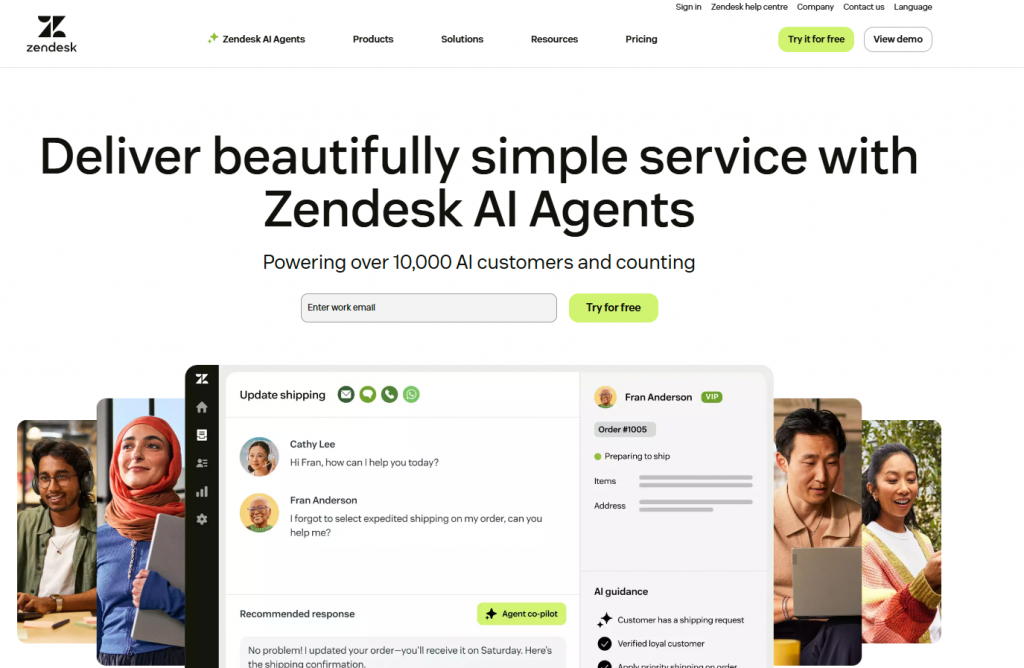
Zendesk AI adds an AI layer to Zendesk’s powerful customer service platform, automating ticket resolution and customer interactions for high-volume ecommerce operations. It helps teams resolve queries faster, reduce repetitive tasks, and maintain consistent experiences across email, chat, and social channels. With AI-powered insights, teams can also identify trends and improve overall customer satisfaction.
Features
- AI-powered ticket triage and automated replies
- Integration with ecommerce platforms and CRMs
- Workflow automation for common queries and requests
- Contextual assistance for human agents
- Reporting dashboards for analytics
Pros
- Enterprise-ready with high scalability
- Deep integration with existing systems
- Strong support for multi-channel operations
Cons
- Mostly assists agents, limited autonomous action
- Complex pricing for smaller teams
Best For
Enterprise ecommerce teams needing scalable AI-powered ticket automation and agent support.
5. Ada CX
Ada is an enterprise conversational AI platform that automates customer support workflows for ecommerce brands. It enables self-service, handles complex queries, executes multi-step processes, and provides seamless handoff to human agents when needed.
Features
- AI-powered automated support across web, mobile, and messaging apps
- Integration with ecommerce platforms, CRM, and backend systems
- Context-aware escalation and workflow automation
- Policy-driven decision logic
- Analytics and insights dashboards
Pros
- Enterprise-ready with scalable automation
- Reduces support costs while improving response times
- Handles complex customer workflows effectively
Cons
- Implementation can be time-consuming for smaller teams
- Pricing geared toward mid-large enterprises
Best For
Large ecommerce brands that want automated self-service and AI-driven support workflows.
6. Forethought

Forethought focuses on reducing ticket volume with AI-driven intent detection and automated resolution, helping ecommerce teams work more efficiently. It intelligently routes and resolves customer queries while learning from past interactions to improve accuracy over time. This allows teams to focus on complex issues while maintaining fast, consistent support for everyday requests.
Features
- AI intent detection for tickets and queries
- Automated response generation and resolution
- Integrates with ecommerce platforms and CRMs
- Supports escalation with full context
- Analytics and workflow tracking
Pros
- Reduces repetitive support tasks
- Fast setup and easy integration
- Improves agent efficiency
Cons
- Limited multi-channel capabilities
- Less suited for executing complex actions autonomously
Best For
Ecommerce teams aiming to reduce ticket volume and improve agent productivity with AI.
7. Kustomer AI

Kustomer AI is a CRM-focused platform that centralizes customer data and automates support workflows using AI, allowing ecommerce teams to provide context-rich customer experiences. It enables personalized interactions by giving agents full context on customer history and preferences, while AI-driven automation handles repetitive tasks. This ensures faster resolutions and a seamless experience across all support channels.
Features
- Unified customer data across channels
- AI-powered response suggestions
- Automation workflows for repetitive tasks
- Contextual human handoff
- Reporting and analytics dashboards
Pros
- Centralized view of customers
- Strong workflow automation
- Context-aware AI support
Cons
- Primarily CRM-focused, not fully action-oriented
- Advanced features can be complex to implement
Best For
Ecommerce teams looking for AI-assisted CRM workflows and unified customer insights.
8. Freshdesk (Freddy AI)
Freddy AI by Freshdesk helps ecommerce teams automate responses, manage conversations across channels, and reduce repetitive support tasks with AI-driven workflows. It also provides actionable insights from customer interactions, enabling teams to identify trends, optimize workflows, and deliver faster, more personalized support across email, chat, and social messaging.
Features
- AI ticket classification and response suggestions
- Multi-channel support (email, chat, social)
- Workflow automation and escalations
- Reporting dashboards for agent performance
- Integrations with ecommerce platforms
Pros
- Easy to set up for mid-sized ecommerce businesses
- Reduces repetitive tasks and ticket load
- Centralized ticket management
Cons
- Less capable at executing backend actions autonomously
- Analytics limited compared to enterprise solutions
Best For
Mid-sized ecommerce teams wanting AI-assisted omnichannel support with workflow automation.
9. Kore.ai
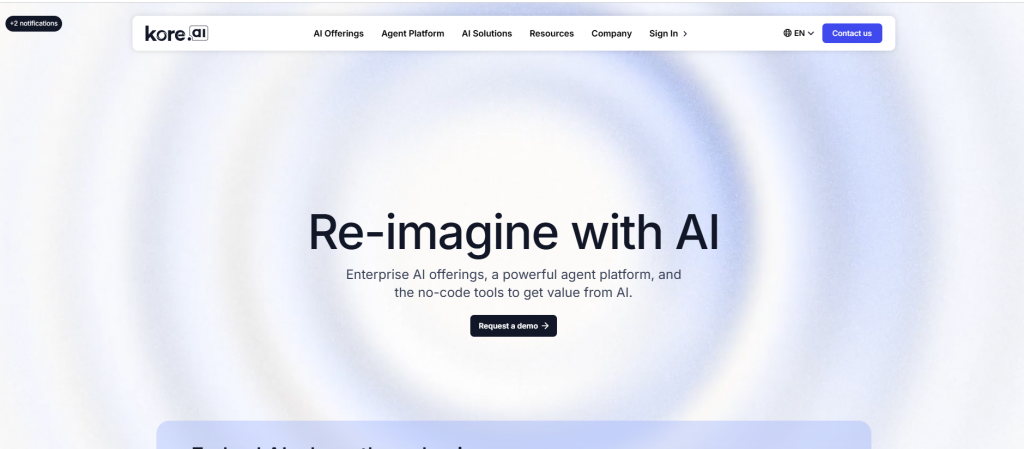
Kore.ai provides an enterprise conversational AI platform that automates customer interactions and integrates deeply with backend systems, enabling complex ecommerce workflows. It supports multi-channel messaging, intelligent routing, and policy-driven automation, allowing ecommerce teams to resolve queries faster, reduce manual work, and deliver a consistent, personalized experience to every customer.
Features
- Conversational AI with natural language understanding
- Multi-channel automation (web, mobile, messaging apps)
- Backend system integrations for executing workflows
- Policy-driven automation and escalation handling
- Analytics and reporting dashboards
Pros
- Enterprise-ready for complex workflows
- Strong backend and ERP integration
- Supports both customer service and operational tasks
Cons
- Can require significant setup and technical expertise
- May be overkill for small-to-mid ecommerce stores
Best For
Large ecommerce brands that need advanced AI-driven customer support and automated operations.
10. LivePerson
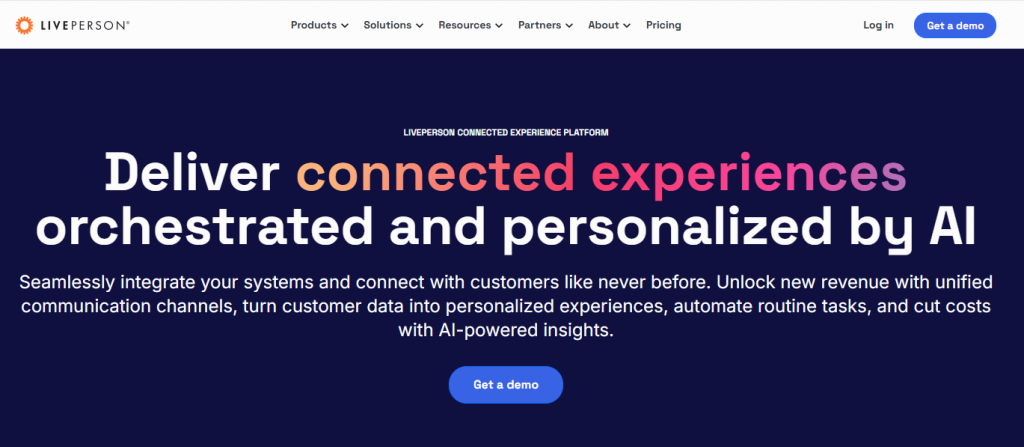
LivePerson provides a conversational AI platform used by large ecommerce and retail brands to automate customer interactions, drive transactions, and improve customer experience across messaging channels. Its AI agents handle high volumes of queries, guide customers through purchase journeys, and provide personalized support while collecting insights that help teams optimize engagement and boost conversions.
Features
- AI-driven conversational automation
- Integration with ecommerce and payment systems
- Multi-channel messaging support
- Contextual human handoff
- Analytics and performance tracking
Pros
- Trusted by enterprise ecommerce brands
- Reduces human workload while improving response times
- Strong multi-channel capabilities
Cons
- Implementation can be complex for smaller teams
- Pricing geared toward enterprise users
Best For
Large ecommerce and retail brands looking for enterprise-grade conversational AI across multiple messaging channels.
AI Agent Comparison: Features, Pricing & Channel Support at a Glance
Here’s a side-by-side look at the best ecommerce AI agents in 2026, including what they are best for, whether a free plan is available, and which channels they support.
| Platform | Best For | Key Strengths | Channels Supported | Setup Complexity | Ecommerce Integrations |
|---|---|---|---|---|---|
| YourGPT | Complete AI Platform for support, sales, and Ecommerce operations | Omnichannel deployment + Voice AI + No-code builder + Custom training on business data | Web, WhatsApp, Messenger, Telegram, LINE, Voice/Phone, Email, Slack | ⭐ Easy (No-code platform) |
Shopify, WooCommerce, Custom APIs, Zapier |
| Gorgias | Shopify & Magento stores with high ticket volume | Deep Shopify integration + Ticket-based automation + Ecommerce-specific features | Email, Live Chat, SMS, Social Media (FB, Instagram) | ⭐ Easy | Shopify (native), Magento, BigCommerce |
| HubSpot (Breeze) | Businesses needing unified CRM + AI automation across sales & marketing | CRM-powered personalization + Marketing automation + Unified customer data + AI Agents (Breeze) | Email, Web Chat, Social Media, WhatsApp | ⭐⭐ Moderate (CRM setup required) |
Shopify, WooCommerce, Zapier, 1,800+ apps |
| Intercom (Fin AI) | Enterprise brands with complex workflows & high support volume | Advanced analytics + AI workflow automation + 51-65% resolution rate + Outcome-based pricing | Web, Mobile Apps, Email, Social Media, SMS | ⭐⭐⭐ Complex (Onboarding required) |
Shopify, Zendesk, Salesforce, HubSpot (via API) |
| ProProfs Desk | Small teams with basic support needs on a budget | Budget-friendly + Simple ticketing + Shared inbox + Basic automation | Email, Live Chat, Social Media (basic) | ⭐ Easy | Basic ecommerce plugins, Limited integrations |
| ManyChat | Social commerce & Instagram/Facebook sellers | Social-first automation + Cart recovery + Instagram DM automation + Growth tools | Facebook Messenger, Instagram, WhatsApp, SMS, Email, Telegram | ⭐ Easy (Drag-and-drop) |
Shopify, WooCommerce, HubSpot, Zapier |
| Botpress | Developers needing custom AI workflows & deep customization | Open-source flexibility + Custom AI agents + Multiple LLM support + Developer-friendly SDK | Web, WhatsApp, Facebook, Telegram, Slack, Microsoft Teams, Custom channels | ⭐⭐⭐ Complex (Coding knowledge helpful) |
Shopify, WooCommerce, Zendesk, Salesforce, Custom APIs |
How to Choose the Right AI Agent: 6 Factors for Ecommerce Success
Picking the wrong AI agent wastes money and time. Here’s what actually matters when choosing one for your store.
1. Store Size and Order Volume
Your monthly order volume determines what you need. If you’re processing under 500 orders monthly, you’re probably dealing with 200-400 support tickets. Basic automation that answers shipping and return questions works fine here.
Between 500-2,000 orders, you’re likely spending 15-25 hours per week on support. That’s real money. An AI agent that handles half your tickets can save $1,200-2,400 monthly in labor costs alone.
Once you hit 2,000+ orders monthly, you’re looking at enterprise-level needs. At 5,000+ tickets per month, a $2,000 monthly AI investment pays for itself by replacing 2-3 full-time support staff.
Quick calculation: divide your total monthly support hours by your ticket count, then multiply by your hourly rate. If you’re spending more than $3-5 per ticket, automation will pay for itself fast.
2. Where Your Customers Actually Talk to You
This matters more than most people realize. If 30% of your sales come through Instagram and Facebook, you need tools built for social commerce. Comment-to-DM automation and cart recovery flows on social platforms can increase conversion rates by 7x compared to slow email responses.
Running traditional support through email and live chat? You need proper ticket routing and shared inbox features. If customers reach you across five or more channels, you’ll need something that brings everything into one place. Missing messages because they’re scattered across platforms costs sales.
3. Your Team’s Technical Skills
Be honest about this. If nobody on your team codes, pick something with a visual builder and templates. Setup should take hours, not weeks.
Have a developer available part-time? You can handle API connections to your store but still need an interface that your support team can manage daily without constantly asking for help.
Got dedicated developers? Open-source or highly customizable platforms let you build exactly what you need. Just remember that “cheaper” platforms can cost $5,000-15,000 in developer time to actually implement and maintain.
4. Budget Reality Check
Under $50 monthly gets you basic FAQ automation on one or two channels. Good for testing, not much else.
$50-500 monthly is the sweet spot for growing stores. You get multi-channel support, proper integrations, and custom training on your products. This range works for most stores doing $50K-500K in monthly revenue.
Above $500 monthly, you’re looking at enterprise features like voice support, advanced analytics, and dedicated account managers. Makes sense once you’re consistently above $500K monthly or handling 2,000+ orders.
Simple rule: if you’re currently spending more than $2,000 monthly on support, even expensive AI solutions will cut that cost by 40-60% while responding faster.
5. How Pricing Scales With Growth
This is where people get surprised. Different pricing models hit differently as you grow.
Per-contact pricing rises steadily with your customer base. Adding 500 customers monthly means your bill goes up $10-30 every month. Predictable but keeps climbing.
Per-ticket pricing fluctuates with support volume. A product launch that doubles your tickets doubles your bill that month. Watch out for platforms that charge you for AI resolutions and also count them against your ticket limit. You’re paying twice.
Flat-rate pricing costs more upfront but stays fixed. If you’re growing fast, this matters. A store going from 1,000 to 10,000 monthly tickets might see costs jump from $60 to $360 with ticket-based pricing, while flat-rate stays at $299.
6. Integration Requirements
Your AI agent needs to talk to your other tools. Native Shopify or WooCommerce integration means the AI can look up orders, process returns, and update shipping without your team doing manual work. That saves 3-5 minutes per order inquiry.
CRM integration gives the AI context about customer history and past purchases. This bumps accuracy from around 50% to 75%+ because the AI knows who it’s talking to.
Marketing tool connections enable abandoned cart recovery and automated follow-ups. This typically recovers 10-15% of abandoned carts.
Check if integrations are native (works immediately), pre-built (needs quick setup), or requires Zapier (adds $20-100 monthly and setup time). Some cheap tools end up costing more because you need expensive middleware or developer time to connect everything. A $50 platform needing $200 in Zapier fees and 10 hours of monthly developer work actually costs over $1,000 monthly.
Before choosing anything, write down your 3-5 must-have integrations. If a platform doesn’t connect natively to at least 80% of them, skip it. The workarounds will cost you more than the price difference.
Related Reading
- How AI Agents Are Revolutionizing E-commerce
- Best Customer Support Tools for E-commerce
- Best AI Chatbots for E-commerce Websites
- Top E-commerce AI Chatbots
FAQ
Can AI agents help boost repeat purchases? ▼
Yes. AI agents can send personalized follow-ups, loyalty rewards, and product recommendations that encourage customers to return and buy again. Studies show that personalized AI interactions increase repeat purchases, with shoppers spending 25% more when returning after using AI recommendations.
Do AI agents connect with email marketing tools? ▼
Yes. Platforms such as YourGPT and HubSpot integrate with email software so you can run unified campaigns across chat, email, and CRM. This omnichannel approach helps maintain consistent messaging and improves customer engagement.
How do AI agents recommend products? ▼
They use customer behavior, browsing history, and past purchases to suggest relevant items in real time, improving upselling and cross-selling. AI-driven personalized recommendations contribute to a 15-20% increase in conversion rates, with 35% of Amazon’s sales coming from AI recommendations.
Are AI agents easy to train on my business data? ▼
Yes. Platforms like YourGPT allow you to upload FAQs, documents, or knowledge base content so the AI understands your store’s products and policies. Most modern platforms offer no-code training interfaces that make customization accessible without technical expertise.
Can one AI agent manage multiple stores or brands? ▼
Yes. Solutions such as YourGPT and Gorgias let you manage customer interactions across multiple stores or brands from a single dashboard. This centralized approach reduces complexity and ensures consistent customer experiences across all your properties.
Do AI agents reduce response times for customers? ▼
Absolutely. They provide instant answers to common questions, and when needed, pass complex issues to human agents with full context. AI agents reduce response times from hours to seconds, with 93% of customer questions resolved without human intervention in well-implemented systems.
Which channels do AI agents typically support? ▼
Most ecommerce AI agents work across web chat, WhatsApp, Messenger, Instagram, and email. Advanced platforms like YourGPT and Intercom also include voice AI for phone support, providing true omnichannel coverage for modern ecommerce operations.
Can AI agents handle refunds or return requests? ▼
Yes. Many integrate with ecommerce platforms to let customers initiate returns, check eligibility, or track the status of a refund. This automation reduces support workload while improving customer satisfaction through faster processing.
DDo I need coding skills to set up an AI agent? ▼
Not necessarily. No-code platforms like YourGPT, ManyChat, and ProProfs are built for non-technical teams. Botpress, on the other hand, offers more flexibility for developers who want deep customization and control over workflows.
How can I measure the ROI of AI agents? ▼
Track metrics such as resolution time, cart recovery rates, conversion improvements, and customer satisfaction scores to understand both efficiency gains and revenue impact. Companies are seeing average returns of $3.50 for every $1 invested in AI customer service, with some achieving up to 8x ROI.
Conclusion
In 2026, AI agents aren’t just a “nice-to-have” in ecommerce; they’ve become a core part of the team. They’re the reason brands can respond instantly, recover sales that would’ve been lost, and offer a consistent experience on every channel.
The data backs this up. With 80% of customer interactions now AI-powered, this is the new standard. Companies are seeing massive 40-60% cost reductions while, surprisingly, making their customers even happier. This isn’t just a trend; it’s an $8.65 billion market for one reason: it gets measurable results, like 15-20% bumps in conversion rates and true 24/7 global support.
But finding the right partner is important. We built YourGPT to be the best and most complete AI-first platform for businesses that want a single, powerful suite for support, sales, and operations including advanced voice and true omnichannel support.
While other tools have their place, like Gorgias for deep Shopify integrations or ManyChat for social-first sellers, YourGPT is the solution for businesses that want one AI platform to handle it all.
The best way forward is to test a couple of platforms with your real workflows. See which one measurably improves your response time, boosts conversions, and improves customer satisfaction. With 95% of AI users reporting major time and cost savings, the question isn’t if you should use AI. The real question is, which platform will deliver the best results for your specific store?
eCommerce Support That Drives Sales and Reduces Load
With YourGPT, automate customer queries, assist buyers in real time, and manage support across every channel.
Full access for 7 days · No credit card required
Leave a Reply